Artifacts

I Found a Newspaper in My Wall

newspaper_texture2814Every few months, the Library gets a call from a homeowner who is in the middle of a remodeling project. It usually goes like this: “I was tearing out my kitchen/bathroom/den and I found a page/section of Courier-Express/Buffalo Evening News from [date] in the wall/floor/ceiling. Does it have any value? Would you like to have it?”

The newspaper-in-the-wall discovery is surprisingly common. Perhaps it fell in through an opening the attic, a possibility in balloon-framed houses. Perhaps someone working on that wall left it there on purpose. Sometimes I wonder if there was a folk practice among tradesmen to leave a dated artifact behind to show when they had been there. But this is sheer speculation.

From the dates supplied by our callers, it seems that the newspaper-in-the-wall was most prevalent between the World Wars. A simple Google search on found a newspaper in the wall turned up stories from around the country of papers dated from the 1920s to the 1940s found during home remodeling projects.

So, let’s answer the top two questions from homeowners:

Does it have any value?
Probably only sentimental. IRS regulations prohibit museum employees from appraising (determining the market value) of private property. We suggest searching eBay to get a rough idea of values. For example, President Kennedy assassination newspapers in mint condition are listed on eBay from $5 to $100. In the end, an object is worth only what someone is willing to pay for it. Which leads to the second question:

newspaper_texture2821Would you like to have it?
Thanks, but no. Newspapers stored in walls are rarely in good condition. They are likely to be incomplete, torn, brittle, discolored, moldy, mildewed, possibly even infested with insects. We cannot risk exposing museum collections or visitors to these hazards. You have our blessing to display, sell, or discard your newspaper-in-the-wall as you see fit.

Don’t get me wrong: libraries have been collecting newspapers pretty much since the invention of newspapers. We pro-actively purchase them on microfilm. It is stable, compact, sturdy, tamper-proof, and resistant to mold, mildew, and insects. No one can deface a page or tear a picture out of film.

Here at the Buffalo History Museum, we have over 200 years of Buffalo newspapers on about 6,500 rolls of microfilm. Our microfilm reader-printer machines make copies from the film for $.25/each. Plus, like most libraries, we lend our newspaper films via interlibrary loan to out-of-town researchers. Readers who wish to borrow film need to make arrangements with your local library, who will handle the request on your behalf. There may be nominal fees.

Have you found a newspaper in your wall? If so, please send us pictures and stories to add to this page! And if there are homeowners or tradespeople out there who ever stuffed a newspaper in the wall during a remodeling or construction project, please tell us about it.

Cynthia Van Ness
DIRECTOR OF LIBRARY & ARCHIVES

My Collecting Passion

Part of TBHM Bill's Collection

My first pack of Football Cards

My passion for collecting began as a young boy when I bought my first pack of football cards in 1965. When I opened the pack to see a Buffalo Bills player on the 2 ½” by 4 ½” card with a pink background and smelled the fresh Topps chewing gum, I immediately fell in love with the idea of collecting cards and the thrill of discovering which players would be inside each pack. This thrill was addictive to me as a young boy, and coincided with my intense interest in football I picked up from my grandfather Cy Sanders, who played college football for Knute Rockne at Notre Dame. Those interests combined with me watching the AFL Champion Buffalo Bills on television and my passion was born. This collector’s passion continued to grow each week as I received my $.25 allowance and rushed to the corner store, on the same city block as my elementary school, to buy another pack of Topps cards.

My first football game

My first football game was an overwhelming experience. To think that I was going to see all my favorite Bills players, Jack Kemp, Elbert Dubenion, Tom Sestak and Mike Stratton that I watched on television, live, in person was almost beyond my imagination.
Part of TBHM Bill's Collection

The anticipation and excitement running through me was almost uncontrollable as I rode with my Dad in his 1964 Ford Station Wagon to my first live football game. As we neared the stadium, the concrete facade of the stadium rose up from the horizon. It seemed so big, and the sight of it made my heart race with excitement.

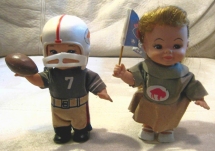
Walking among all the parked cars, seeing all the people grilling food, eating, throwing footballs, was an amazing sight to behold. As we got closer to the entrance gate, I noticed vendors with carts, selling souvenirs. Immediately, I ran to one of them to get a close up of what they were selling. After reviewing all of the items for sale, I begged my Dad to buy me a bobble head doll and a pennant. Luckily he relented, and my collecting passion grew. I thought this experience was just as good as, if not better than, getting packs of football cards.
Part of TBHM Bill's Collection

Upon entering the stadium, I saw another vendor standing next to a few boxes, yelling “Get your program, get your game program, only $.50.” Again, I begged my Dad to buy me a program, which he did. I must have leafed through that program at least a thousand times, until the pages became dog eared. Incidentally, I now own every program from every Bills game.

Following the game, a Bills victory that solidified my attachment to the team forever, I returned home and placed the bobble head doll on my bedroom dresser in the most prominent spot. I hung the pennant on the wall behind my bed, so I could see it each night before going to sleep.

I still have the original three collectibles from that first game I attended with my Dad, and since 1965, have amassed the largest Buffalo Bills football memorabilia collection.

Passion for History
Part of TBHM Bill's Collection

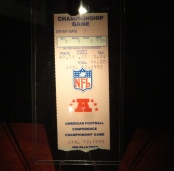
As I went through school, I really enjoyed my history classes and was especially interested in American History. When I graduated from college my interest in American History aligned well with my Buffalo Bills collecting passion. The Bills are much more than a football team to Western New York. They are a critical part of the fabric of the community and the region’s history. As I began earning my own money, I started to add to my Collection with a focus on capturing the Buffalo Bills history from their founding in 1960. I thought back to all of the football cards I had collected throughout my youth that I had left at my parents’ house when I left for college. Upon returning home and much to my disappointment, I learned that my mother had thrown out most of my football cards when cleaning house while I had been away. As I would tell her years later, she and other mothers like her (with the desire to clean) helped create an entire industry. The value of baseball and football cards has increased due to their scarcity. As baby boomers try to recapture their childhood, these cards continue to rise in value.

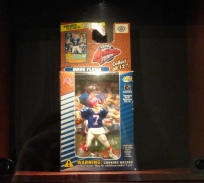
That setback of losing my precious football cards further fueled my passion to collect the story of the Bills history through football cards, programs, publications, and collectibles of all sorts.
Part of TBHM Bill's Collection

The Hunt

One of the thrills of collecting is “the hunt,” the passion and focus to find another collectible to add to your growing collection. The thrill of finding the item you don’t yet have makes the hunt worthwhile. I believe it is the combined passion of the hunt and the thrill of finding an item you don’t yet have in your collection which fuel the collector’s desire.

My hunting and searching have taken me to countless garage sales, flea markets, sports card shows, memorabilia shops, antique markets, used book stores, toy stores, malls, stadium shops and other collectors homes. Always on the search and looking for that elusive Buffalo Bills collectible. 

The best feeling for me as a collector is that evoked on a crisp fall morning before dawn breaks at the Clarence flea market, flashlight in-hand, hunting for Bills collectibles. Moving among the vast array of artifacts and collectibles from dealer to dealer, rooting through box after box, I then feel the thrill in finding a new Bills item for my Collection.

Before eBay came along, I scoured through classified advertisements in the Buffalo News, Sports Collectors Digest, Beckett, among others to find another collectible. In addition, I sent hundreds of letters to fellow collectors, dealers, and teams and made dozens of telephone calls networking with other collectors and dealers asking about Bills collectibles.

To obtain autographs of players, I purchased address lists and sent letters to the players’ homes. I went to the Bills annual training camp and hung out after games outside the team locker room, trying to obtain autographs. In addition, I attended many events where players were signing – commemorative dinners, card shows, book signings, and store promotions.

I have had many wonderful, memorable experiences while searching for my collectibles.

Greg Tranter
TBHM Board Member
Summer Intern Diaries

When I came to The Buffalo History Museum for an internship with the Collections department in the Resource Center, one of my primary tasks consisted of cataloguing a collection of Fisher-Price toys from the 1960s through the 1990s.

The collection is a treasure trove of Fisher-Price at its best: Little People and lap desks, chime balls and a cash register, telescopes and a Toot-Toot steam engine. ???????????????????????????????There’s a rainbow grand piano, a saxophone, and a xylo-drum. The oldest toy is a 1963 “Huffy Puffy Steam Engine” with a cheerful face on the engine and a caboose; the newest toy is the brightly colored saxophone, which chirps peppy notes and dispenses soap bubbles from its bell when played.

Aside from getting to revel in the nostalgia that accompanied cataloguing toys from my childhood, I was also lucky enough to interview one of Fisher-Price’s retired toy engineers. Fred Robjent worked as a Product Development Engineer from 1978 to 2005. After receiving his Associate’s degree in mechanical engineering and his Bachelor’s degree in agricultural mechanization, Mr. Robjent worked at a few smaller companies before joining the Fisher-Price team. Once hired, he went through a rigorous training program. He went on to work as an engineer for the company through its periods of massive growth, its time under Quaker Oats, and finally its purchase by Mattel.

Mr. Robjent helps Walter Mayer, our Director of Collections, with the upkeep and repair of an apostolic clock in the collection. When he heard we were doing a project on Fisher-Price artifacts, he brought a number of his own personal artifacts, vintage catalogs, and limited employee edition books to the Resource Center for me to use in my research. He was happy to shed light on the design process and share his knowledge of the specific artifacts in our collection.

Fisher Price Roller SkatesMr. Robjent personally worked on the iconic Fisher-Price roller skates. He designed and patented a mechanism that made the toy skates safer for preschoolers. If you had a pair of the skates in the early ‘90s, like I did, you might remember the yellow switch on the bottom of the skate that allowed parents to choose from three settings. One stopped the wheels from moving at all, one stopped the skates from rolling backwards, and one allowed uninhibited skating. While Mr. Robjent has eight patents in his name, this was the one that seemed to make him most proud.

Fred Robjent spoke often of the company’s desire to make the toys as safe as possible. Fisher-Price set numerous safety standards in the toy industry that remain in place today. However, when asked what he loved most about working for Fisher-Price, Mr. Robjent said that it was the company’s family atmosphere he loved most.

Samantha Vandermeade
Summer Intern, Collections Department

Greetings Military History Enthusiasts!

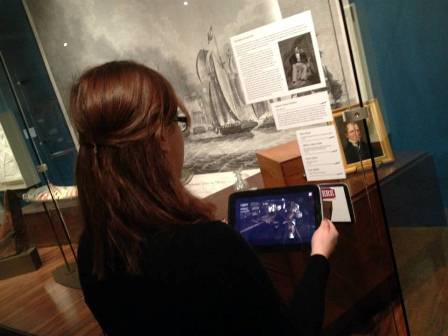
Last fall, to commemorate the bicentennial of the War of 1812, the Museum  premiered “By Fire & Sword: War in the Niagara Theatre.”   This exhibit focuses on the Niagara Frontier’s role in one of our nation’s most  formative military engagements.

Marketing Associate, Jen LaBella, demos one of the tablets.

Marketing Associate, Jen LaBella, demos one of the tablets.

This exhibit is the Museum’s most modern and interactive to date. Inside, Google Nexus tablets will use military re-enactments and green screen technology to guide guests through the nearly two and a half year campaign.

Historical narrators featured include Laura Secord, Cyrenius Chapin, General McClure, and more. The technology driving By Fire & Sword is a collaborative effort between The Buffalo History Museum and Canisius College and is funded by the Perry Memorial Fund.

Tony Greco with ceremonial headress

Tony Greco with ceremonial headress


I wish that I had the ability to see the Museum again for the first time. So much has changed. The impact and optimism of that change has grown exponentially in the community. We hope to see you will stop in for a visit. We think you’ll be happy you did.

Anthony Greco
Director of  Exhibits & Interpretive Planning

Spotlight Artifact: Bathing Suits

Now that summer is finally upon us, we decided to share a past article from our Summer 2013 issue of “The Album,” featuring two bathing suits from our collection.


Wool Swinsuit, 20-30s

Bathing Suit • “Neptune’s Daughter” • Niagara Knitting Mills Corporation Wool • 1920s-1930s

The swimsuit has a long and varied history. In the early 1900s, women wore long gowns with bloomers underneath. These bathing gowns were weighted down by several heavy layers of material, occasionally with weights sewn into the hem so the material would not float. Fabrics were chosen for bathing suits that would not become transparent when wet. By the 1920s, swimsuits were mostly made out of wool for that very reason. Being so absorbent, swimsuits tended to become heavy and uncomfortable, not to mention itchy in the summer sun. This black wool swimsuit from our collection dates from the 1920s to the 1930s. Labeled “Neptune’s Daughter,” this one-piece swimming suit with attached knickers was made by the Niagara Knitting Mills Corporation of New York, NY.

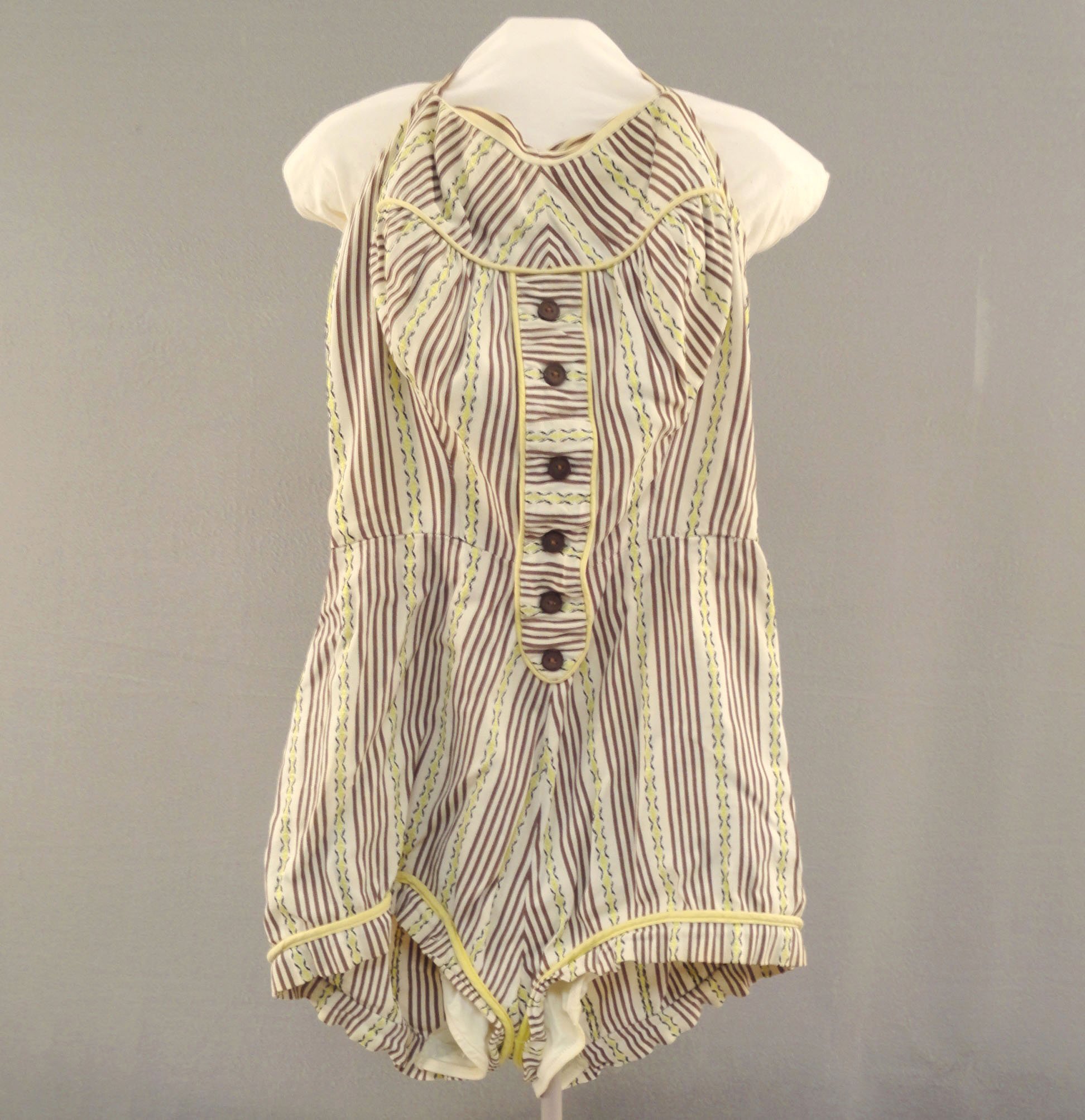
Bathing Suit Rose Marie Reid of California Acetate 1960s-1970s

Bathing Suit • Rose Marie Reid of California • Acetate • 1960s-1970s

By the 1930s and 40s, bathing suits were rapidly changing. Hemlines were shorter and more bare skin was showing. It was not until the late 40s and early 50s that one-piece bathing suits, or maillots, started to be produced in a variety of fabrics, moving away from wool. For comparison, we have a patterned swimsuit, from the 1960s to the 1970s. This brown, yellow, and black stripped acetate bathing suit, donated by Angela Georgi, was created by Rose Marie Reid of California. Made from a light-weight, stretchy fabric, one would imagine that this would have been much more comfortable to wear to the beach.

Rebecca Justinger
Registrar

Introducing our new Picture Store

Ladder No 8 Interior_web

From the collection of The Buffalo History Museum.

The Buffalo History Museum is proud to present our new online store, created so individuals, families, or businesses may purchase images from our vast image collection! The museum library is working closely with Digital Ark Corp. out of Providence, RI to deliver high quality scans directly to the purchaser. The new store, “The Picture Store by the Buffalo History Museum,” can be accessed through our website on the Gift Shop page and the Research Library page.

From the collection of The Buffalo History Museum.

From the collection of The Buffalo History Museum.

Currently, there are 191 images to choose from, and every month we are sending new images to be uploaded. Each picture is tagged for a category which will make searching easy and, we hope, intuitive for the user. Starting at $25, you can order these museum quality productions and all proceeds go to collections care and museum operations.

We have worked hard to dissect our collection and to choose images which we feel would help Buffalonians better understand the history of our city and our current place in it. Ultimately, it is our wish that this store can offer insights into the people who have come before us to work, live and play in Buffalo, NY.

Shane Stephenson
Library Technician

Albert H. Chestnut Diaries

French Toast – Dip stale slices in batter of thick milk (1/2 small cup/eggs),

sugar, salt, eggs, vanilla & fry with little more cream then pancakes – can deep fry

Does the recipe trigger a happy memory of cooking with a family member? Or a morning breakfast with a good friend? To Albert Chestnut a recipe was a motivator to help him survive. Albert was a prisoner of war. The Japanese held him captive in the Philippines and Japan for a total of three years and five months during World War II. While captive, he spent much of his time reading, playing cards and writing in his diaries about the poor and inadequate food he was served. At his lightest, Albert weighed less than 100 pounds, was malnourished and tried to obtain vitamins from Japanese doctors. Many of the final pages in Albert’s first diary are devoted to recipes and planning out weeks’ worth of meals for when he hopes to return home; return home to Buffalo.

For the past few months, I have been fortunate enough to spend time transcribing Albert’s diaries. Albert wrote in unusually tiny pencil handwriting, 1/16” at the most, which is why I have been devoting my time and eyes to transcribing his personal piece of history. Because of the pencil writing, there are often words or sections of pages that have become smudged or blurred making it difficult to read portions of the passages.

Albert Chestnut

Albert Chestnut, photo from the collection of The Buffalo History Museum

Albert Chesnut’s first diary begins around April 9th, 1942, the day the United States surrendered at Bataan and Americans and Filipinos were consequently taken captive by the Japanese. April 9th is also the first day of the Bataan Death March; a march that led Albert and the other prisoners up the Bataan peninsula stopping at Marveles, Cabatuan, St. Fernando and finally, ending at Camp O’Donnell, an eighty mile march, which was completed in only eleven days. After nearly seven months of being held at Camp O’Donnell, Albert’s hope of a quick rescue was beginning to fade; “November 1 – Must admit that am quite disappointed for honestly hope help would come by now.” Three days later Albert was sent by train back down to Manila, marched through the business district and held on a dock in the bay for four days. Over a thousand men were then packed below the deck of Nagato Maru, known as a Japanese Hell Ship, and sent to Japan. “November 7 – Last night a real terror – Left Manila about noon as part of big convoy – Really sort of glad to leave Philippines but even ocean breeze cannot help heat and stench of hold where have to eat too – Toilet facilities hopelessly inadequate – Two meals a day – Packed 75% of men below for night as heat terrific – Had hatch covered for time to keep out rain.”

Once in Japan, Albert was sent to Osaka and, on January 16, 1943, he began his stay at a camp know as Zentsuji. While there, Albert faced many of the same conditions as Camp O’Donnell; starvation, poor sanitary conditions, and a constant risk of life threatening diseases. Keeping his spirits up Albert spent much of his time reading censored Japanese newspapers, reading circulating books (“Franklin” by Bernard Fay, “The Well Tempered Listener” by Deems Taylor, “Hunchback of Notre Dame” by Victor Hugo), playing card games, attending prisoner run classes such as Spanish, Trigonometry and Bookkeeping, and going to lectures at night also given by other prisoners.

I am beginning transcription of the second diary and have reached December of 1944, but still have months to get through. As of December 1944, Albert is still being held at Zentsuji, but as I read, I routinely find heartbreaking entries such as these:

“March 17 1943 – Another glorious spring day for St. Patrick’s Day – Badly miss the little Irish box sis always sent for the season.”
“April 26 1943 – …Certainly miss Easter eggs and basket of other years which gave me so much pleasure for days afterwards.”
“June 6 1943– Today is sis’ birthday and feel sorry can’t help her celebrate.”

Pages from Albert Chestnut's diary, from the collection of The Buffalo History Museum.

Pages from Albert Chestnut’s diary, from the collection of The Buffalo History Museum.

Reading and transcribing these diaries have taken me to another place in a different time and have reminded me to be grateful for everything I have. For curious readers, I skipped ahead to Albert’s final entry on October 22 1945; he writes “This was the day of days, the culmination of over four years of hoping, waiting and praying – At just past 12:30AM train left Buffalo and mother and sis waiting with box of cookies and other stuff.”

Albert Chestnut donated his diaries, the photograph in this post, his Army commission and other family papers in 1999 (Mss. A99-10). Due to the fragility of the diary bindings and the possible handling smudges, the physical use of the diaries are restricted to serious researchers with a valid ID from an institution of higher learning and are engaged in a PhD dissertation. I invite you to come in to the Research Library, take advantage of the transcription and take a transformational journey with Albert Chestnut.

Amy Miller
Assistant Librarian

Signs from Different Times

Working in the museum’s Collections Department has given me the chance to encounter some very interesting artifacts. The same can be said for my work as the Archivist for the Sisters of St. Joseph of Buffalo. I never thought to contemplate what kinds of similar things exist in both places until the idea was presented to me.  In looking back at everything I have worked on over the years, I realized that  one type of object I had come across quite a few times were signs. It’s a funny thing to think about what a sign can really mean to a place, people, and/ or time in history. When I see a sign on a building, or on the side of a road, I don’t really think deeply about its significance. But when a sign is viewed outside of its original location, or out of context, it almost forces you to think about where it came from and its significance. Some of my most interesting research has been done because of signs.

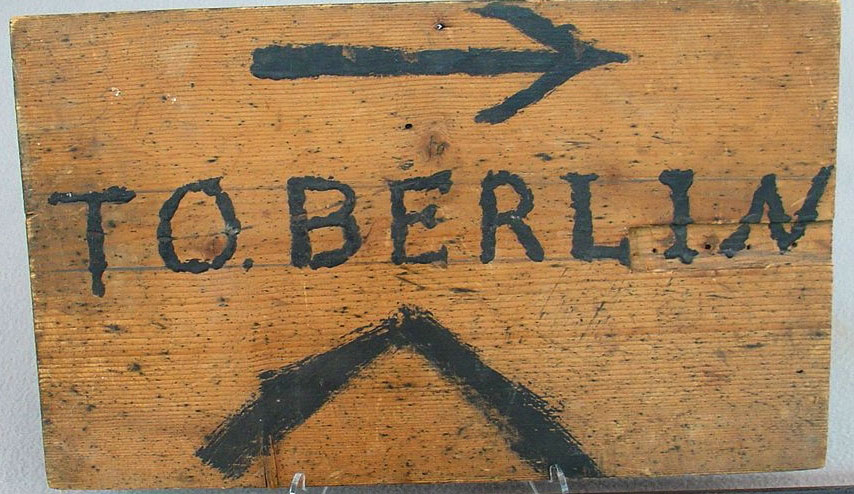
One of the first signs I worked on at the museum was one made by a member of the American Expeditionary Forces in WWI. For history buffs like myself, researching information about important historical periods, like WWI, is usually something to look forward to because more times than not you come out knowing so much more than you knew before you started. WWI sign

For example, “TO BERLIN”:  I knew before starting my research that it was originally hung in a town in France called Thiaucourt.  What I discovered was that the town was involved in a major battle of the war, the St. Mihiel Offensive, which was led by General John “Black Jack” Pershing in September 1918. This action during the war was particularly significant because it was the first large-scale offensive action that was taken by American forces independent of the Allies. It never ceases to amaze me when I see objects like this sign which have withstood the destructive violence of war and yet find their way to places thousands of miles away. I only wish that we knew more about the man (or men) who made that journey happen.

In a city like Buffalo, there is a lot of history to look back on and reminisce about. There have been a lot of events, neighborhoods, people, and buildings that have made the city what it is. Once in a while those things come back into the spotlight and being able to look at artifacts from the past makes for an interesting comparison to the present. One area of the city that has been in the headlines for many years is the Webster Block.
???????????????????????????????
 It was a timely thing, then, when I came across two street markers from the corner of Main and Perry Streets ???????????????????????????????during the time the sale to the Sabres was happening. These marble street signs were actually incorporated into the exterior of a building that sat at that corner in 1838. They were chiseled from the sides of the building at an unknown time and eventually donated to the History Museum in 1969. Not having known much about the Webster Block before working on these signs, I was unaware that part of it was located at this intersection and in doing my research, I was even more surprised to find that it had been built up all the way back in 1835 by a prominent figure in Buffalo history, Benjamin Rathbun. Just because of these two signs, I learned some very interesting information about the city I’ve lived in my whole life that I had never even thought to ponder.

It’s amazing what a sign can show you!

Sabine Fisher
Collections Assistant

Me and Mabel Barnes

– Kindred WNY spirits in history?

Since I began working at The Buffalo History Museum last July, I’ve thought more about personal histories and the artifacts that we leave behind as individuals.

During my first month, Melissa, The Buffalo History Museum Executive Director,  referred to the diary of Mabel Barnes numerous times. Mabel’s diary is one of the museum’s most detailed personal journals in its collection from the  1901 Pan American Exposition. Our conversations about Mabel’s diary and how valuable it is to researchers today – 113 years after the Pan Am – inspired me to dive into my personal journals, which had not been cracked open since 2004.

Journals by Kim

Adamant about  journal writing…  

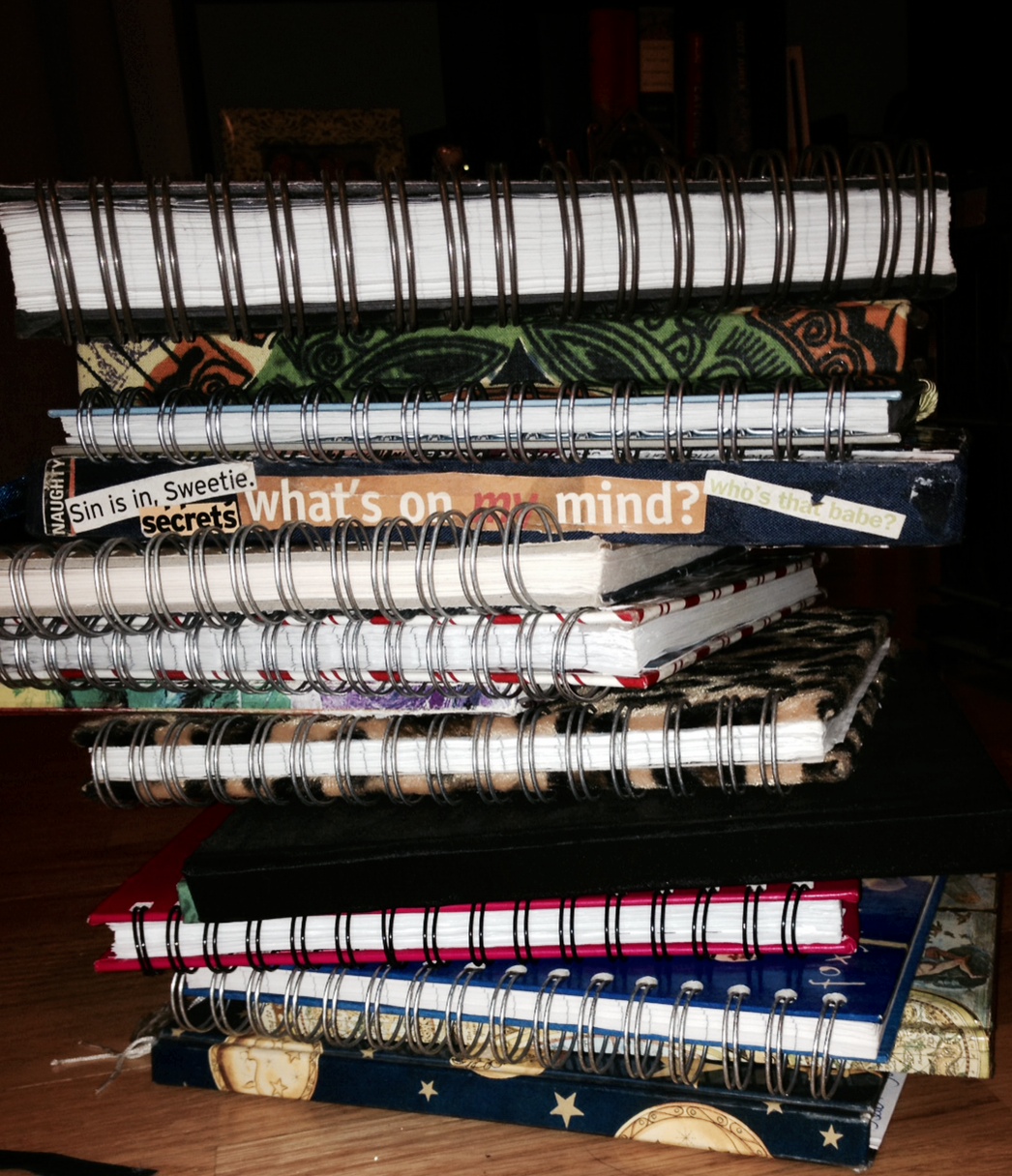
From the ages of 12 – 19, I was adamant about journal writing. I have a stack of bright spiral bound notebooks, covers ranging from leopard fur, polka dots and hot pink, documenting my adolescent years. It’s pretty incredible to look back ten, fifteen years ago and read, in my own handwriting, about what ailed me.

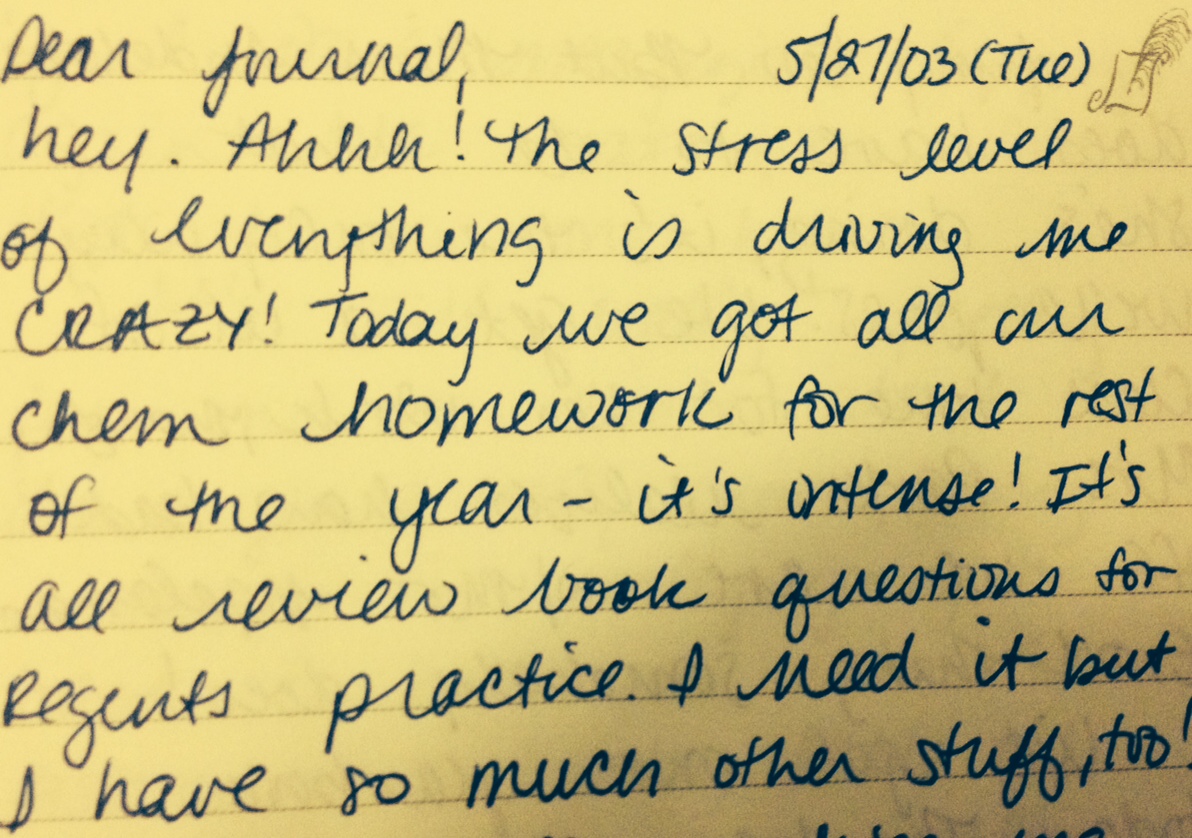
Honestly, I forgot how hard high school was. I forgot how stressed I became over school, sports, a part time job and friends. The excerpt photographed is from May, 2003. As juniors, we had to take five NYS Regents (English, American History, Chemistry, Math B and Foreign Language) exams within the same week. It was grueling. Studying for and passing these exams was all I wrote about for a month.

A  page from Kim's diary

An intense page!

There was a break in the study pattern when my best friend and I bought copies of “Harry Potter and the Order of the Phoenix” – we even drove ourselves in Shannon’s clunker and ate at Mighty Taco – at MIDNIGHT! Very cool at 17 years old…

Twenty-five pages of suspense later, I wrote about passing all five Regents exams, though not all with grades mom wanted to plaster on the fridge.

I took a hiatus from journal writing from college through last year. My exposure to personal histories here at the museum has made me more cognizant of my personal legacy. I want my grandchildren to read what I went through – to know that I, too, worried about passing tests, getting my driver’s license, and finding a prom date (not an easy feat at an all girl’s high school). I hope that my future family will be able to relate and find joy from my teenage years.

My New Years’ resolution was to start journaling again this year. Two and a half months in, I’m holding strong.

Kimberly Luangpakdy
Director of Resource Development 

Mabel Barnes page

A page from Mabel Barnes journal.

Mabel Barnes, daughter of Joshua Barnes, a confectioner, was born in 1877 and was part of the Old Central High School graduating class of 1894.  She began her teaching career with the Buffalo Public Schools at School 23 on Delavan Street in November 1895.  She attended the 1901 Pan Am Exhibition 34 times. 

Greetings!

Today Jen and I dialed up our go-to-guy-for-all-things-museum-cool, Brian McAlonie, at Thinking Outside the Square

Brian running a workshop under the portico.

Brian running a workshop under the portico.

We wanted to pick his brain about our new blog, cuz if ever there was a great go-to place for expert feedback, it’s at TOTS.

jenworking2

Jen working hard on our quarterly newsletter.

The good news: Brian likes The Buffalo History Museum’s Blog! 

Jen LaBella, TBHM Marketing Associate and Graphic Artist, deserves big kudos for setting it up. Yours truly souped up the “Latest News” page on our website by linking the blog button. BlogButton

We are now ready to share to the universe and we’re psyched about our new (to us) frontier!  We hope the content ahead serves an audience with extra special museum and history news: from the ordinary to the extraordinary, we’re here to share.   

Cmc and Walt

Walt & me on the portico.

Just in, as I was writing this:  Walt Mayer, Director of Museum Collections, called to tell me about a great idea for sharing Victorian love sentiments from the collection every Friday in February to celebrate Valentine’s Day!  You’ll be able to find that on our Facebook page so check back in to see some historic images of romance.

 Gotta run, lots to do… 

 – Connie Caldwell, Director of Communications & Community Engagement