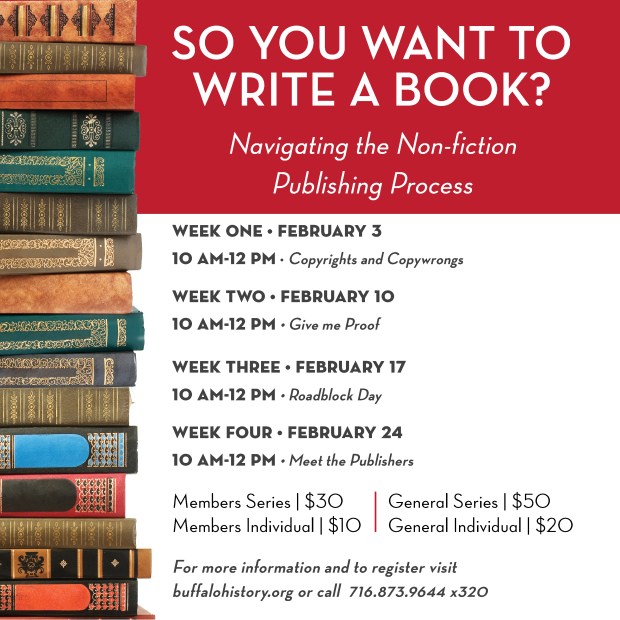
How many times have your friends said, “You should write a book!”? Would you like to write a memoir or do you have expertise in one unique thing that no one else has written much about? Are you overwhelmed by your term paper, thesis, or dissertation? Or have you finished researching your family history and want to share it with the community? Perhaps your employer wants a souvenir book about its history to present to VIPs. Is your neighborhood or house of worship’s history missing from the library’s bookshelves? Or you’ve already published some essays or you had a blog and you want to collect your best work in a single volume.
If you are contemplating a book project, getting published is easier than ever. The bewildering variety of options include self-publishing, online publishing, and traditional commercial publishing. And there is much more to finishing your project than choosing your words, sentences, and paragraphs.
The Buffalo History Museum is pleased to offer a 4-part workshop series on navigating the nonfiction publishing process called So You Want to Write a Book? On all four Saturday mornings in February 2018, we will tackle critical questions on copyright and intellectual property, citing your sources, overcoming roadblocks, and finding a publisher or self-publishing.
Aspiring authors can sign up for the full series or pick and choose which sessions to attend. All sessions will be held in the auditorium of The Buffalo History Museum at 1 Museum Court, corner of Elmwood and Nottingham Terrace. Parking is free in our lot, plus we are on the #20 bus line.
The schedule is:
- Week One: February 3, 2018, 10 am – 12 pm
Copyrights and Copywrongs
Nonfiction writing 101; how to make sure your research is legal; understanding permissions and intellectual property. Featured speakers are Cynthia Van Ness, Daniel DiLandro, and Stephanie “Cole” Adams
- Week Two: February 10, 2018, 10 am – 12 pm
Give Me Proof
Citing your sources, using footnotes or end notes, compiling bibliographies and indexes; establishing your authority, and crediting those whose work you relied on. Featured speakers are Cynthia Van Ness, Daniel DiLandro. Frank Kowsky, and WNY Indexers.
- Week Three: February 17, 2018, 10 am – 12 pm
Roadblock Day
How to get unstuck, featuring a Q&A panel of local authors who have been in your shoes: Rosanne Higgins, Tom Reigstad, Shane Stephenson
- Week Four: February 24, 2018, 10 am – 12 pm
Meet the Publishers
You finished your book, now what? Meet with local publishers and distributors and discuss book layout, marketing, and social media. Featured speakers are Brian Meyer of Western New York Wares and Marti Gorman of Buffalo Heritage Unlimited.
- Member rate for entire series: $30
- Member rate for individual sessions: $10
- General public rate for entire series: $50
- General public rate for individual sessions: $20
To register online, go to:
www.buffalohistory.org/Visit/Calendar.aspx
Click on February. Then click on any of the workshops and scroll to bottom.
Questions? Call 716-873-9644 x320 or email mmacneill@buffalohistory.org
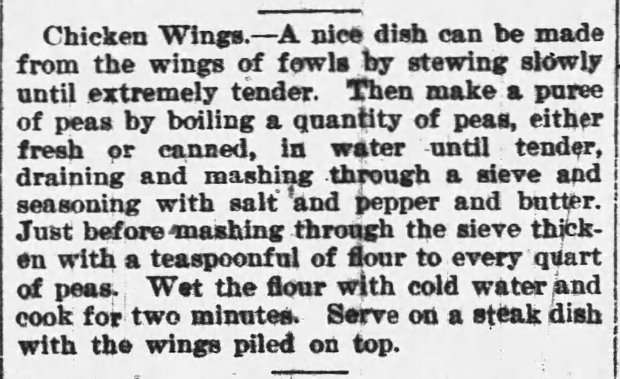


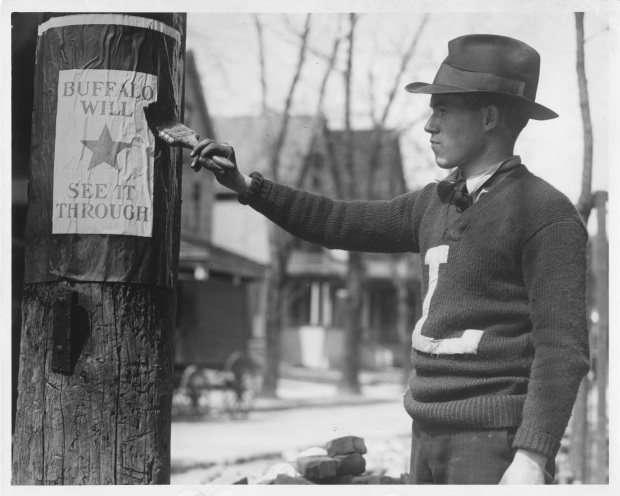
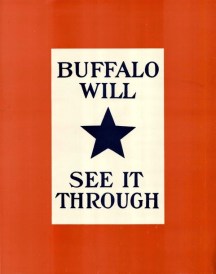
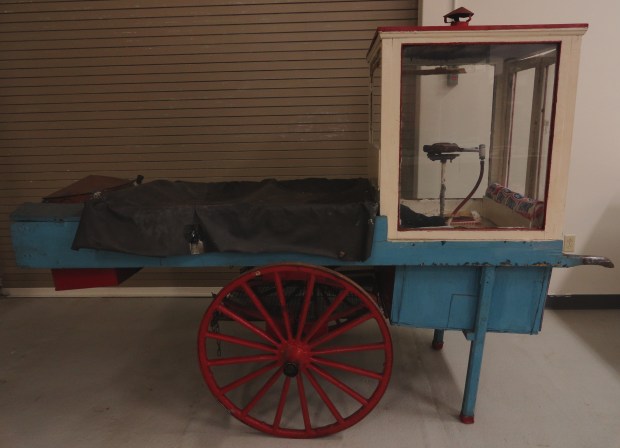 Starting in the mid-1960s, a Greek immigrant named James Eoannou purchased his friend’s concession pushcart and began selling popcorn, peanuts, and corn-fritters in North Buffalo neighborhoods. He later moved to Delaware Road and began servicing the suburban neighborhoods in the Town of Tonawanda and the Village of Kenmore. One of the signals that summer had come to Buffalo was the arrival of the popcorn man. James was a full-time cook for the Buffalo Athletic Club and loved to go for long, rambling walks. He decided to put his walks to good use and bring some joy to children, and often the adults, of these neighborhoods.
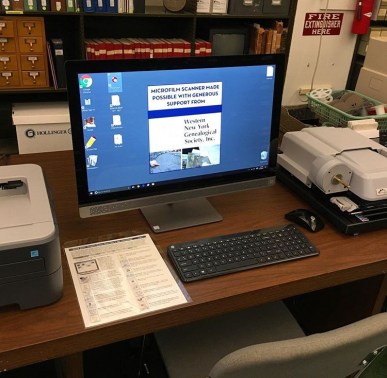 2. Read a newspaper published the day you were born. We have Buffalo newspapers on microfilm from 1811 to about 2011, including Polish and German papers published here. We can get out y
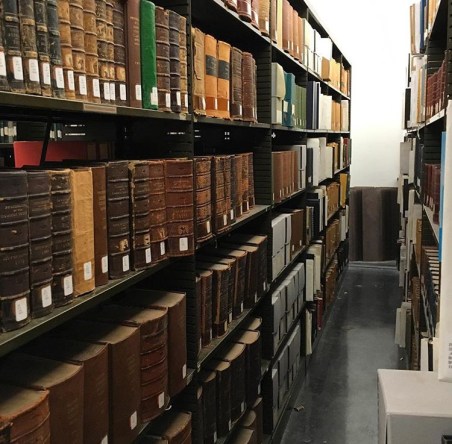 5. Look at Buffalo & Erie County atlases. We have roughly one per decade from 1850 to 1950, with a few gaps. What’s great about them is that they show footprints of individual houses & buildings that used to be there or might still be there today. You can look at them one by one and see when your house first appears, which helps you narrow down when it was built.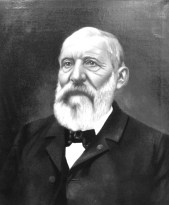
 In our upcoming World War I exhibit, “For Home and Country”, we will be featuring an oil painting by Lt. Clement C. Beuchat, entitled “78 Lightening Division at Thiaucourt, France, 1918”. This piece depicts a group of World War I soldiers on horseback in the town of Thiaucourt, France, most likely illustrating the remains of the town during or after the Battle of Saint-Mihiel.
 While doing the research on this painting and Clement, I learned that Beuchat was an original member of the Saturday Sketch Club in Springbrook, New York along with other artists such as Arthur Kowalski, Harry O’Neill, William J. Schwanekamp, and Julius Lankes.
  This is notable because there is a sketch box used by Buffalo painter and engraver, J.J Lankes as part of the Saturday Sketch Club, in our collection. The Saturday Sketch Club was formed in reaction to the dismissal of Mr. Earnest Fosberry, an artist and teacher at the Buffalo Fine Arts Academy. A group of students, including those mentioned above, created this art school with Mr. Fosberry as their instructor and critic, as a way to protest the firing of their favorite teacher.
 The students would meet at a cabin out in Springbrook, NY to immerse themselves in nature. They all had their own sketch boxes with attached seats that were portable and could be carried throughout the surrounding area to set up a painting station wherever they liked. The sketch boxes, like the one in our collection, were made up of wooden boxes attached to wooden folding stools that had multi-colored canvas seats for the artists to sit on while they worked. The boxes opened on metal hinges that locked to create makeshift easels. Inside the box would be all the tools an artist would need including a wooden palette, paints, paintbrushes, and charcoal.


 In 1987, Julia Boyer Reinstein, historian and architectural preservationist, donated over 80 quilts and bed coverings to The Buffalo History Museum. Early on in her life, Julia became fascinated with quilts and believed in the importance of documenting their histories. She received a Bachelor’s degree in History from Elmira College for Women in 1928, writing her senior thesis on early American quilts. Beginning her collection with family quilts, she focused her collecting goals on quilts made west of the Genesee River. Remarkably, only twelve of the quilts in her collection were purchased, the rest were given to her as gifts or through inheritance.
 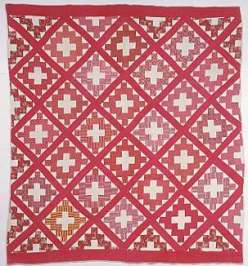 Pictured is a red and white Chimney Sweep quilt from Julia Boyer Reinstein’s quilt collection, also known as an Album or Autograph quilt. It was pieced together by Eliza Graves (later Pickett) between 1852 and 1853, and was assembled and completed in 1854, in Perry, NY. Eliza Graves, pictured above, was Julia Boyer Reinstein’s great grandmother. The Chimney Sweep pattern was very popular for Album quilts in the mid-19th century because a name or inscription could be written on the central cross of each block. According to oral histories from the family, the blocks of this quilt were originally autographed, in pencil, by the young men of Castile, NY.
 The Buffalo History Museum Blog