Abraham Lincoln and Buffalo, NY

StateCourtLincoln028cropped

The Lincoln statue was originally located in the State Court, it was commissioned by the Lincoln Birthday Association, founded by, and in honor of Buffalonian Julius E. Francis. (Charles H. Niehaus, Sculptor; 1902)

“Tens of thousands shall inhabit this country where only thousands inhabit it now.”

President-elect Abraham Lincoln arrived at Buffalo’s Exchange Street Station on the evening of Saturday, February 16, 1861, while journeying to Washington for his inauguration. Today the site is occupied by a modern Amtrak station.

Lincoln was met by former President Millard Fillmore and an enormous, enthusiastic crowd. By some estimates, 75,000 citizens swarmed downtown Buffalo to get a glimpse of the new president.

After making his way through the crowds to the American Hotel, Mr. Lincoln appeared on the balcony and was welcomed by the acting chief magistrate. The site of the American Hotel is now occupied by the Main Place Mall. 

Readers may be interested to know what he said to Buffalo on that day: “MR. MAYOR AND FELLOW CITIZENS:—I am here to thank you briefly for this grand reception given to me not personally, but as the representative of our great and beloved country. Your worthy Mayor has been pleased to mention in his address to me, the fortunate and agreeable journey which I have had from home—only it is rather a circuitous route to the Federal Capitol. I am very happy that he was enabled, in truth, to congratulate myself and company on that fact.

It is true, we have had nothing thus far to mar the pleasure of the trip. We have not been met alone by those who assisted in giving the election to me; I say not alone, but by the whole population of the country through which we have passed. This is as it should be. Had the election fallen to any other of the distinguished candidates instead of myself, under the peculiar circumstances, to say the least, it would have been proper for all citizens to have greeted him as you now greet me. It is an evidence of the devotion of the whole people to the Constitution, the Union, and the perpetuity of the liberties of this country. I am unwilling, on any occasion, that I should be so meanly thought of as to have it supposed for a moment that these demonstrations are tendered to me personally. They are tendered to the country, to the institutions of the country, and to the perpetuity of the liberties of the country for which these institutions were made and created.

Your worthy mayor has thought fit to express the hope that I may be able to relieve the country from the present, or, I should say, the threatened difficulties. I am sure I bring a heart true to the work. For the ability to perform it, I trust in that Supreme Being who has never forsaken this favored land, through the instrumentality of this great and intelligent people. Without that assistance I should surely fail; with it I cannot fail.

When we speak of the threatened difficulties to the country, it is natural that it should be expected that something should be said by myself with regard to particular measures. Upon more mature reflection, however, I think,—and others will agree with me—that, when it is considered that these difficulties are without precedent, and never have been acted upon by any individual situated as I am, it is most proper that I should wait and see the developments, and get all the light possible, so that, when I do speak authoritatively, I may be as near right as possible. When I shall speak authoritatively, I hope to say nothing inconsistent with the Constitution, the Union, the rights of all the States, of each State, and of each section of the country, and not to disappoint the reasonable expectations of those who have confided to me their votes.

In this connection, allow me to say that you, as a portion of the great American people, need only to maintain your composure, stand up to your sober convictions of right, to your obligations to the Constitution, and act in accordance with those sober convictions, and the clouds which now arise in the horizon will be dispelled, and we shall have a bright and glorious future; and, when this generation shall have passed away, tens of thousands shall inhabit this country where only thousands inhabit it now. I do not propose to address you at length. I have no voice for it. Allow me again to thank you for this magnificent reception, and bid you farewell.”

Source:
Crosby, Frank
Life of Abraham Lincoln, Sixteenth President of the United States: Containing His Early History and Political Career; Together with the Speeches, Messages, Proclamations and Other Official Documents Illustrative of His Eventful Administration, pp. 75-77. Philadelphia, PA: J.E. Potter, 1865.

Crosby’s book is online in full text at Google Books. Paragraphs were added for the purpose of this article.

Cynthia Van Ness, MLS
Director of Library & Archives

*This article was featured in The Buffalo History Museum‘s Spring 2015 issue of The Album.

** For more Lincoln love join the Buffalo Civil War Roundtable as they celebrate President Lincoln’s Birthday. There will be a short program and a Lincoln orator. Join uniformed re-enactors as they perform a rifle salute on the Portico. Local authors will be present and there will also be activities for the whole family. Sunday, February 14, 2016 from 12-2pm. FREE. More info at buffalohistory.org.
Buffalo Newspaper Custom Search Engine

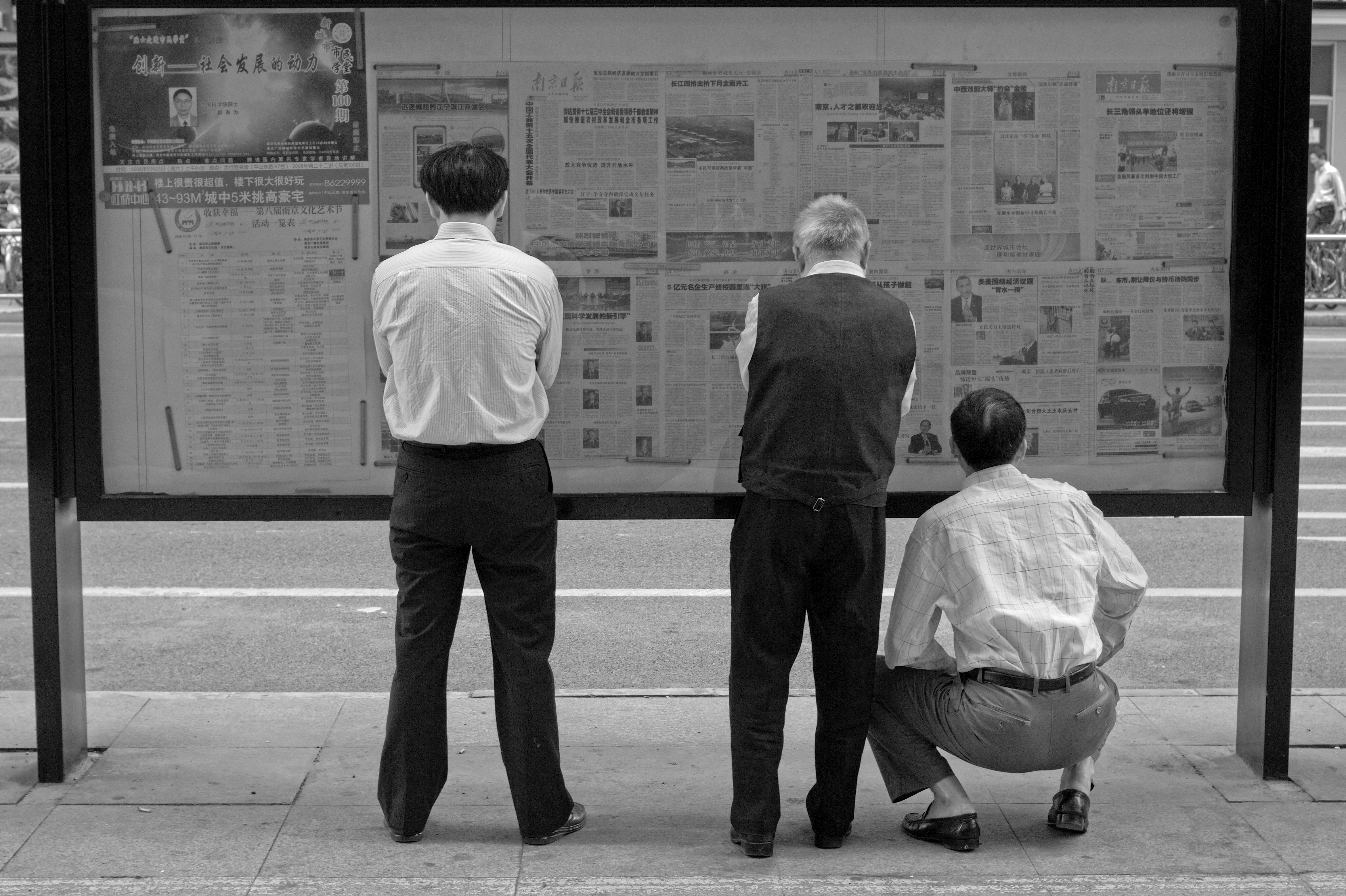
People_are_reading_newspaper_on_the_street

One of our most frequently asked questions is “Can I search old Buffalo newspapers online?” The answer is, “It depends.” Some newspapers have been digitized at some websites, which we talk about below. But all of the major Buffalo newspapers starting with our first paper, the Buffalo Gazette, founded in 1811, are not online in any comprehensive or systematic way. We hope to make an announcement soon about a newspaper digitization plan.

Until then, there are multiple online newspaper sites with random chunks of this or that newspaper, so we decided to make our own search engine to make it easier to access them. We focused on sites likely to have Buffalo articles and sites indexed by Google.

When we had several that fit the bill, we set up a custom search engine called Buffalo Newspapers.

With this single search box, you can simultaneously drill into these newspaper sites and use all of the Google operators you’ve gotten used to, like quotation marks to find a phrase, or the –(minus symbol) to leave out a word. Four of the sites are free, but two have a paywall or require a paid membership. At the pay sites, you may get the first paragraph free, which will help you decide if it is worth purchasing the entire article.


What’s Under the Hood:

Name of Site Comments Coverage begins Coverage ends Fee or Free Indexed by Google
Buffalo News The Buffalo News does not permit Google to index its archives, but it has a reseller, Highbeam.com, who does 1998 present $ Yes, through Highbeam.com
Chronicling America This is where the Library of Congress is gradually digitizing the nation’s newspapers Colonial Era 1922 Free Yes
FultonHistory.com Scanned microfilms from around upstate NY, with imperfect OCR[i] 1795 2007 Free Yes
New York Times The NYT used to pay attention to Buffalo. When you open a link from the NYT, look for the tiny link to download a PDF 1851 1980 Free Yes
Newspapers.com Operated by Ancestry.com, presently has 61 newspapers from around New York State 1797 1977 $ Yes
NYShistoricnewspapers.org  This is a collaborative effort to   host digitized newspapers from around New York State Colonial Era 1922 in most cases Free Yes

[i] OCR stands for Optical Character Recognition, the software that enables a computer to “read” printed pages and make them full-text searchable

If you like this search engine, we invite you to embed it at your blog or website. Please contact us in the Library to request the code: library@buffalohistory.org.

Cynthia Van Ness
Director of Library and Archives

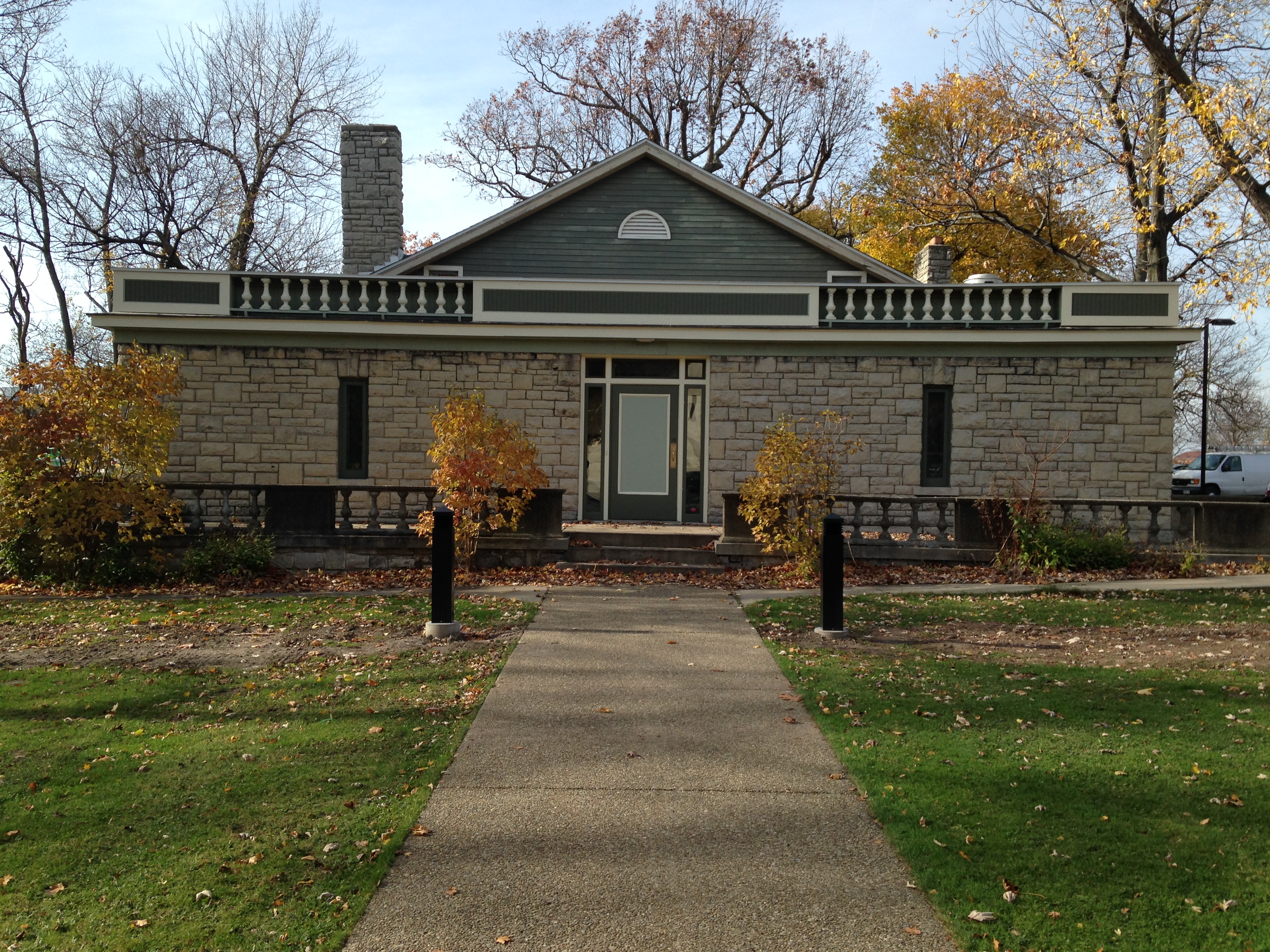
History of the Julia Boyer Reinstein Center

Julia Boyer Reinstein Center

Julia Boyer Reinstein Center

Every wonder what the story is behind that little building across from The Buffalo History Museum lot? Well here are some fun facts to learn more about The Julia Boyer Reinstein Center!

• Built in 1920 for Leonard Adams. Mr. Adams helped to design the house, which he used as both a residence and a music studio before his death in 1984.

Purchased in 1989 by The Buffalo History Museum as a project of the “History Lives here” capital campaign to serve as office/meeting space.

• The Historical Rehabilitation project was completed August 1, 1992, by Hamilton Houston and Lownie Architects, P.C.

• The building was named after Julia Boyer Reinstein. Dedicated to both history and libraries, Julia Boyer Reinstein served as the Cheektowaga town historian for many years and was active in the creation of numerous town historical societies across WNY.

• The contributions of Julia Boyer Reinstein and others throughout the community made the purchase and historical rehabilitation of the building possible.

• A full-length portrait of Julia Boyer Reinstein painted by local artist Mary Smith hangs on the landing of the split staircase.

IMG_4994• The Reinstein Center features two meeting rooms (40 people/15 people). The larger room is graced by an arched window measuring approximately 12’x 12’. The window sits in an “Architectural Frame” that centers the window both in the main room and across the outside of the building.

• In 1994, the Landmark Society of the Niagara Frontier awarded the Pewter Plate Award to The Buffalo History Museum in the recognition of the Julia Boyer Reinstein Center as an exemplary restoration and adaptive re-use project.

Street of Shops Makeover

streetofshopssignsAbove the staircase and leading to the museum’s lower level are engraved words, “1870s Street of Shops.” This signage and the exhibit it teases were intended to endure time. For over a half century, it has done just that.

The exhibit lies within earshot of my office, from which I have listened as thousands of visitors have passed through the artificial streetscape. Many reminisce about their childhoods, each storefront sparking a different story. Others recall seeing the display with their parents when they were young. It became evident that the exhibit had, over time, become as much a part of people’s memories as the items held within it.

streetofshops2In recognition of this, we worked to update the Street of Shops while maintaining its history and charm. The exhibit now boasts a new paint job, with colors inspired by late 19th century paint swatches preserved in our library. A newly installed ceiling painted as the sky adds to the display’s immersive ambience. The most notable change, however, is the space formerly occupied by our Buffalo Savings Bank display which has been transformed into a family-friendly interactive photo studio. 

BfloBlissCutieThe newly added space, Bliss Bros. Studio, was inspired by a longstanding and well-respected photography business which first opened on Main Street in 1861. For over 50 years, the Bliss family produced some of the city’s finest portraits and landscapes. Now, the story of their business will be shared with our visitors.

bflobliss2Inside the studio, guests are encouraged to dress up in vintage clothing and pose in front of our custom made backdrop to create their own vintage portrait. Images may be shared via social media by using the hashtag #buffalobliss. When at the Museum, visit our new studio, take your picture (or a “selfie” as it were) and join in on the fun while being a part of continuing story of photography.

Anthony Greco
Director of  Exhibits & Interpretive Planning

(This article was featured in our Summer 2015 issue of “The Album“. TBHM’s quarterly newsletter)

Death of the card catalog (dun dun dun!)

User comments

Cataloging card cabinets

Friday, October 2, 2015 marked the official end to the Online Computer Library Center’s (OCLC) printing of catalog cards for libraries. Yes kids, as seen in the haunted New York Public Library basement of Ghostbusters or the cabinets in the background of The Big Bang Theory. Nearly all libraries have now incorporated the use of an online catalog essentially rendering cataloging cards obsolete. While many libraries may still have ordered the cards as a back up to their online system, OCLC decided it would no longer supply the cards and could turn its attention to other prevalent issues libraries are facing. For those of you curious to see what was printed in the final batch of cards, check out this video and article from The Columbus Dispatch.

Examples of the Research Library catalog cards. The cards on the left side shows beautifully handwritten cards from our Old Book Catalog, which we still use. The cards on the right side are from our last batch ordered from OCLC. Notice the “end of life” statement on the first printed card.

Worry not my nostalgic friends; we at the Research Library still have a couple of card catalog cabinets that we use almost on a daily basis. Those of you who have visited us recently may have checked out our Obituary Index (1811-2001), or the Buffalo/Erie County Civil War Enlistees Index. So, if you’re in the mood for a trip back to your younger years, stop by and take in the sights of the card catalogs we still use. Just watch out for the Library Ghost!

Amy Miller
Assistant Librarian & Archivist

The Birth of Journalism in Buffalo

BfloExpress18121013wm (2)October 3, 2011 went uncelebrated as a major anniversary in Buffalo’s history. Two hundred years earlier, Buffalo’s first newspaper, the Buffalo Gazette, began publishing on October 3, 1811. An annual subscription cost $2.50, equal to about $44 in today’s dollars.

The Buffalo Gazette was founded by the Salisbury brothers, Hezekiah A. Salisbury (1789-1856) and Smith H. Salisbury (ca. 1783-1832). Because of the difficulty of securing reliable supplies of paper, publication was irregular. The first paper mill west of the Genesee River did not open until 1817 in Batavia.

The first page of the issue of the Gazette devoted several column inches to listing books and pamphlets available for sale at the Buffalo Book Store and featured an excerpt from the Manual of the State of New York. Back then, “news” was what happened in the outside world, information that was in high demand in isolated frontier villages. What happened here was already known to Buffalo’s small population (1508 in the 1810 census). Local coverage was sometimes sparse in these early newspapers.

War of 1812 researchers will be disappointed by the Gazette’s lack of coverage of the Burning of Buffalo. Dec. 14, 1812, was the last time the Gazette was published before the press was moved for safety to Harris Hill in Clarence. The Salisbury brothers had assessed the risk correctly, for the British burned Buffalo to the ground on December 30, 1813. No reporters were at the scene; residents supplied eyewitness accounts, sometimes long after the event. The next issue of the Gazette appeared on January 18, 1814. It did not return to Buffalo until April 1814.

The Research Library has the Buffalo Gazette on microfilm, plus it owns a set of very fragile bound volumes of original issues starting in December 1812. The Gazette underwent a series of name changes (Niagara Patriot, Buffalo Patriot, Buffalo Patriot & Commercial Advertiser), ending its long journalism tenure in December 1924 as the Buffalo Commercial Advertiser. We have all surviving issues of these newspapers on microfilm.

In 1812, the Salisbury press also published Buffalo’s first book, the French Convert, an anti-Catholic novel that had been popular in Europe for almost a century. The Research Library owns the sole surviving copy in Buffalo. The Salisbury press next published speeches by Red Jacket and Erastus Granger on the role of Indians in the War of 1812.

To see the Buffalo Gazette and the French Convert, visit the Research Library during our public service hours, Wednesdays through Saturdays, 1-5 pm, with special extended Research Library hours the 2nd and 4th Wed. of each month 6- 8 p.m. No appointments are necessary.

– Cynthia Van Ness, Director of Library and Archives

*This article was featured in the Spring 2014 issue of “The Album”

Favorite Library Acquisitions

During my tenure here at The Buffalo History Museum, I have had many interesting items and collections come across my desk. The vast majority are from generous donations and a select few are ones my boss has found. I’ve decided to pick out a few of my favorites to share with you.

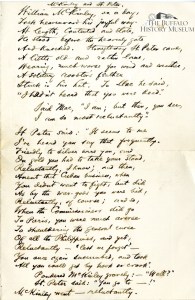
McKinley Poem1. McKinley Poem, 1899. Call number: Mss. A2013-33

This poem is written on the back of a note from Augustus Strong of Rochester to Wilson Bissell of Buffalo; however, the author of the poem is unknown. What is so intriguing about the poem is the prediction of President McKinley facing St. Peter and answering for his polices while holding office. The poem was written in 1899 and sent to a resident of Buffalo. As you all know, President McKinley was assassinated two years later in Buffalo.


2. Meldrum’s special Pinochle playing cards. Call number: GV 1235 .M4 1915   HA Meldrum Co Pinochle Cards

Library catalogers typically don’t encounter 3D objects; those are more frequently found in museum artifact collections. However, we received a donation of a deck of Pinochle playing cards from H.A. Meldrum and wanted to include these in the library collection due to the image of the department store on the cards. This was a unique challenge to accurately describe the cards, a 3D object, within the confines of a library catalog that typically deals with paper.


3. Exit 51W / by Kasia Keeley. Call number: Rare N 6498 .P37 B8 2012

This was another fascinating discovery by my boss and would more accurately be described as artwork than a book, as it contains no linguistic content. It proved to be another unique challenge for me as a cataloger. The artist created a serigraphy and cut paper book of scenes along I-90W from the East, Rt. 33 at Exit51W and Rt. 198. The book has a single piece of grey card stock holding it together that once opened, unfolds like an accordion. Over top of the card stock, the artist has cut paper scenes. They include the Statue of David, the Richardson Complex, the Buffalo History Museum, Niagara Street, the Electric Tower and the Liberty building to name a few. If you’re interested in seeing it, stop by the library or check out the artist website: http://www.kasiakeeley.com/Kasia_Keeley_Artwork/Exit_51W.html


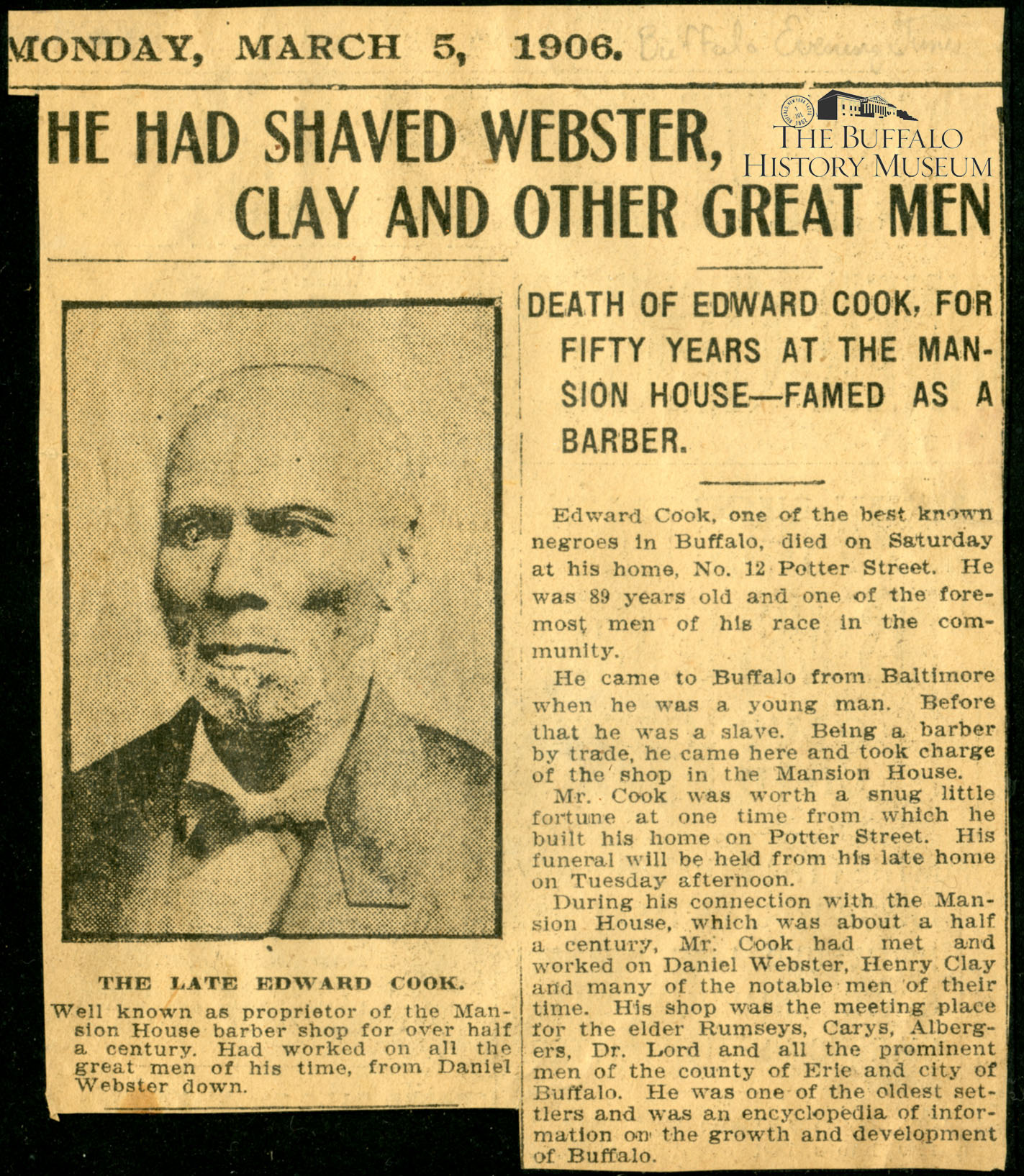
4. Edward Cook Freedom Papers. Call number: Mss. A2013-110 A2013-110 Edward Cook Obit

Just like the many archives of the world, we too make our own discoveries. While only ‘lost’ for a short time, the needs of this collection were finally able to be met 10 years after acquiring it. The collection was donated in 2003 by Dr. Bruce Lee, a descendant of Cook. Edward was the son of Henry Cook, who came to Maryland in slavery from Africa. Henry escaped slavery and joined the Mohawk Indian tribe. He met and married Patty, an Indian woman, and together had Edward, making Edward a free man. Edward moved to Buffalo as a young man, where he made a living being a barber at the Mansion House. The collection includes a photograph of Edward, Baltimore County freedom paper certifying he was born free, baptism certificate for Edward, a permission note to travel at night and his obituary.

Queerie Queers
5. Queerie queers with hands, wings and claws with illustrations by Palmer Cox.
    Call number: Rare PR 9199.2 .C69 Q84

This children’s book, illustrated by Palmer Cox, was published by John D. Larkin out of 663 Seneca Street. The book features many short stories, magic tricks to do at home and less than common nursery rhymes. For example, I grew up on the simple version of “Jack and Jill went up the hill to fetch a pail of water.” However, the version John D. Larkin helped to publish had a much longer introduction to Jack & Jill. “For an idle lad, as he was, Jack had no traits, after all, that were very bad. He was simply Jack with the coat on his back patched up in all color from gray to black. Both feet were bare; and I do declare that he never washed his face; and his hair was the color of straw.” Thankfully, his soap business was more successful than his publishing.

Amy Miller
Assistant Librarian & Archivist

Secrets from the stacks: Erie County Penitentiary Prisoner Identification Cards

The “Secrets from the Stacks” is a program that is offered only a few times a year to spotlight items the Research Library does not typically get to show off. The program being held on June 6, 2015 will feature the Erie County Penitentiary prisoner identification cards (Mss. B85-6). The collection dates from 1896 to 1914, with the bulk of the photographs being from 1899 to 1905. This collection was donated to the Research Library by the Erie County Correctional Facility (Wende) in 1986 and just recently has been arranged, indexed and cataloged, making it accessible to interested researchers with a Scholar Pass.

Antwater Back WatermarkThe identification cards used by the Erie County Penitentiary are the precursor to modern day finger printing. The cards mimic the Bertillon system in order to identify repeat offenders by their physical features and dimensions, such as their head length, length of middle finger and the length of their foot. The cards also contain the offender’s name, aliases, age, nativity, occupation, charges and sentencing information. These cards were then arranged by a unique system and referenced upon their re-arrest. The Research Library greatly appreciated the donation due to the collections valuable genealogical, sociological, criminology and anthropological research potential.

The program will feature many of the identification cards for the attendees to view, along with photographs of the Erie County Penitentiary to help place the collection within context and other true crime resources. The program will run from 10 am to 12 pm on June 6, 2015. The completed index is available online, by going to http://tinyurl.com/TBHM-prisoners.

Amy Miller
Assistant Librarian & Archivist

Spotlight Artifact: Pacemaker

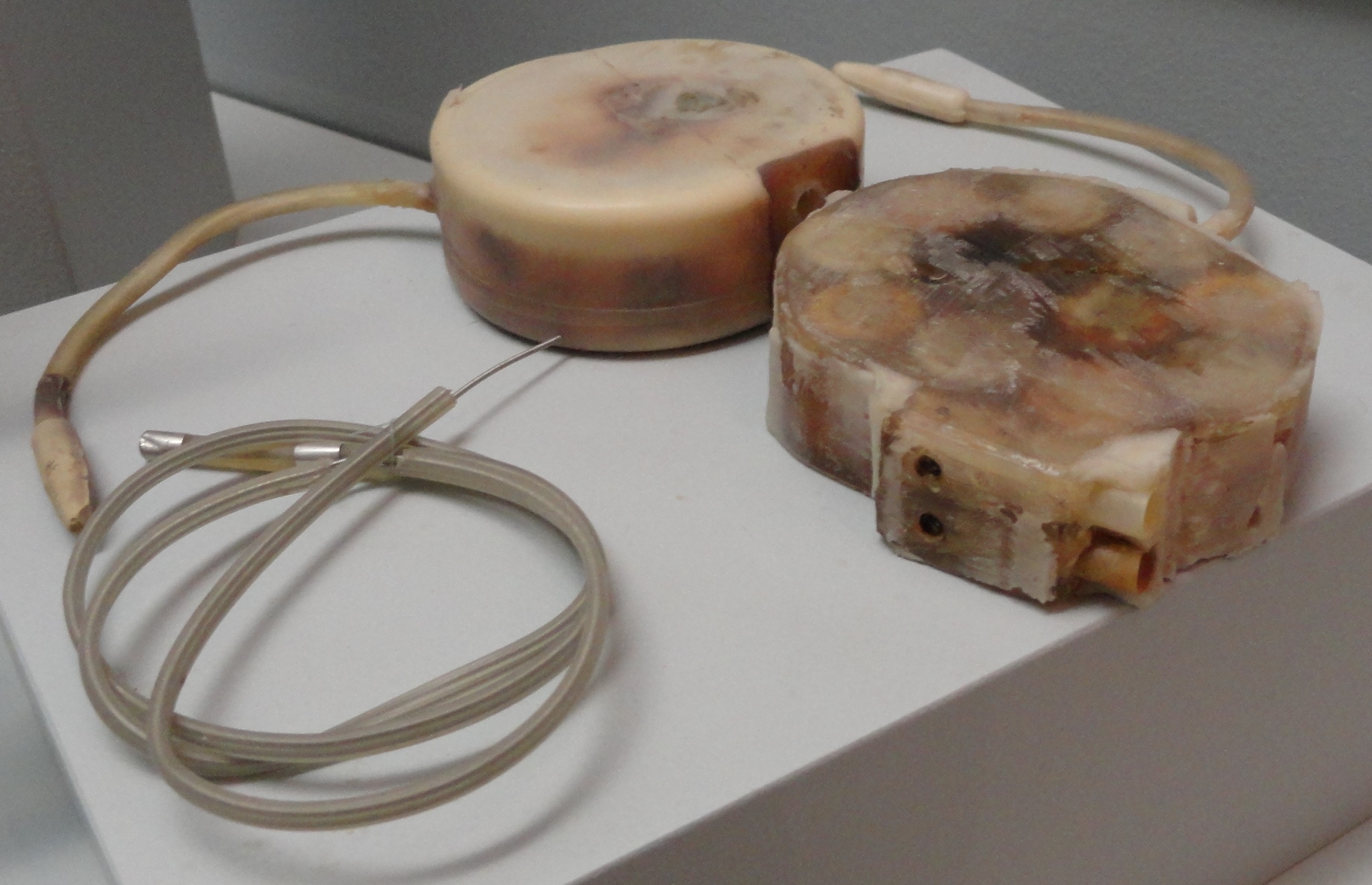
From the TBHM Collection Medtronic Minneapolis, MN 1965

From the TBHM Collection
Medtronic
Minneapolis, MN
1965

In 1958, Dr. Wilson Greatbatch of Clarence, NY invented and patented the lifesaving cardiac pacemaker. Dr. Greatbatch worked alongside Dr. William M. Chardack and Dr. Andrew A. Gage to create the device and it was first used in humans at Millard Fillmore Hospital in 1960. The variable rate/variable output artificial implantable cardiac pacemaker and the fixed rate/fixed output artificial implantable cardiac pacemaker, which are shown in the photograph above, are on permanent display in the Bflo. Made! Exhibit. These two medical marvels are perfect examples of the ingenuity and inventiveness that Western New York has to offer.

Dr. Greatbatch founded Wilson Greatbatch Ltd. in 1970 to develop long-lived primary batteries to fuel pacemakers. He created the lithium iodide battery system to replace the mercury batteries that powered the early models that are on display in the museum. To this day, both the pacemakers and the special batteries that meet the particular needs of the pacemaker’s pulse generators are made by Wilson Greatbatch, Ltd. in Clarence. Dr. Greatbatch’s exceptional inventions maintain a profound, global impact in our lives.

– Rebecca Justinger, Registrar

*This article was featured in the Winter 2013 issue of “The Album”

Impact of the Library

TBHM LibraryIf you’ve taken up genealogy, you know the impact of finally finding a picture of your great-grandfather’s tavern. Or seeing a picture of the long-demolished corner deli where you bought Atomic Fireballs as a kid.

And then there’s the impact when a new fact upends your understanding of what happened back when. Gospel truth does gets demoted to urban legend, but first it puts up a fight. One of the just-will-not-die Buffalo urban legends is that in 1901, every house in Buffalo was supposedly photographed for the Pan-American Exposition and we have the pictures. If only it was true!

We do have an estimated 12,000 house pictures dating mostly from 1870-1970, but there was no campaign to photograph the entire city for the Pan-Am. We don’t have pictures of everyone’s house, then or now. There are another estimated 12,000 pictures of schools, factories, churches, hotels, office buildings, grain elevators, and so on. Our pictures are not online, so an in-person visit is needed to see them.

This extensive collection of architectural imagery has another kind of impact: economic.

How so?

Maybe you’ve noticed that Buffalo’s often deteriorated buildings are getting restored, repurposed, and re-occupied at an unprecedented rate. The Lafayette Hotel renovation was just the most celebrated of a long and growing list of rehabs. In Buffalo, existing buildings are attracting more private construction dollars than new-builds. This resurgence has a lot to do with the National Register and New York State’s preservation tax credit program.

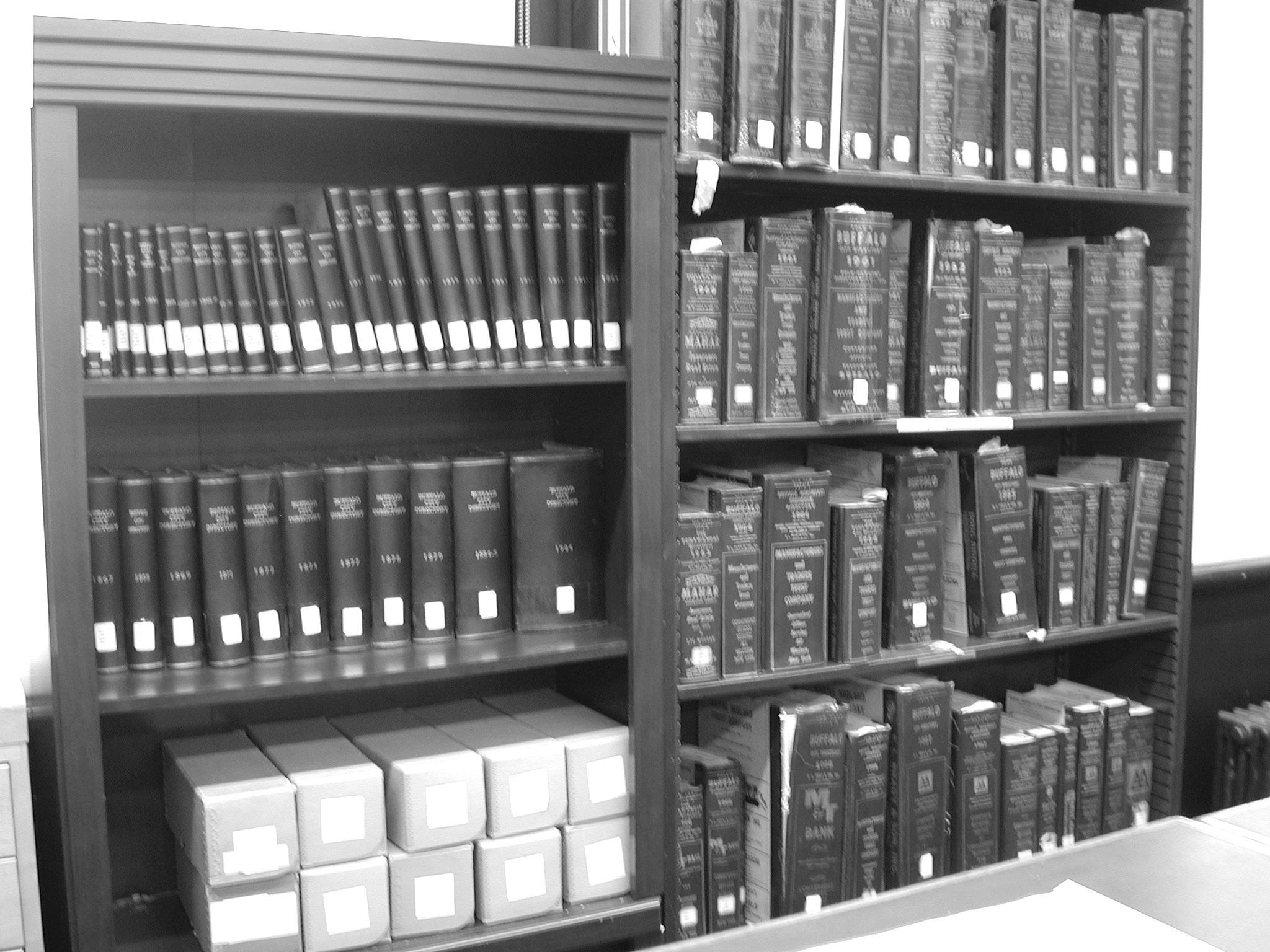
In most Buffalo neighborhoods, getting listed on the National Register opens up tax credits for the restoration of old buildings, both residential and commercial. Property owners typically depend on professional architectural historians to write National Register nominations. In turn, professional architectural historians depend on the Library’s collection for historical evidence, visual and otherwise, to make the case for National Register eligibility. We have the region’s largest collection of period photographs, atlases, and architectural drawings.

TBHM LibraryInvestment = jobs, and not just for architectural historians. Bringing back old buildings means hiring architects, engineers, roofers, plumbers, plasterers, electricians, painters, carpenters, decorators, and more. Preservation is good for Buffalo’s economy because when you renovate an existing building, you typically spend about 60% of your budget on labor, which is usually supplied by local talent. In turn, those paychecks are spent mostly in the local economy on rent, groceries, etc. The remaining 40% goes to materials, which are usually manufactured elsewhere. For a new build, that ratio is reversed. Forty percent of your budget goes to labor and 60% leaves the local economy to buy materials made elsewhere.

We like to think that in our own indirect way, the Library is helping save Buffalo, one building at a time.

To learn more about New York State’s preservation tax credit program, go to: http://nysparks.com/shpo/tax-credit-programs/

To learn more about the National Register, go to: http://www.nps.gov/nr/faq.htm

To learn more about the economic impact of historic preservation, go to: http://www.achp.gov/economic-general.html

– Cynthia Van Ness, Director of Library and Archives

*Article featured in the Fall 2013 issue of “The Album”