 African-American Grant Johnson began his career as a fleet, power-hitting shortstop with the integrated semi-pro home town Findlay Sluggers, one of the fastest nines in the Hancock County, Ohio area. Able to hold their own against visiting Major League clubs, in October 1893 Johnson led his club to a 5 to 4 victory over the visiting National League Cincinnati team, hitting two home runs against the Majors’ top hurler, 35 game winner Tony Mullane. In the following year, Johnson is reputed to have struck 60 home runs for his squad, thus earning his nickname of “Home Run.” The Sluggers of 1894 also boasted the venerable baseball skills of John “Bud” Fowler–perhaps the black baseball pioneer–at second base. In 1895, with the tragic onset of segregated baseball, Fowler and Johnson relocated to Adrian, Michigan, where they formed the formidable traveling Page Fence Giants.
These Giants claimed the honor of being the best club in black baseball in 1896. By 1899 they had migrated to Chicago, claiming a second championship in 1901 as the Columbia Giants. Johnson next moved to the New York City-based Cuban X-Giants, helping to lead them to a championship over the Philadelphia Giants in 1903. In 1905 Johnson, now the shortstop with the Philadelphia Giants, helped lead that club to an Eastern championship. He also picked up a reputation as a fine spot starter as a pitcher, winning six games in 1905.
Off the field, Johnson was one of the men who helped to form the National Association of Colored Professional Clubs of the United States and Cuba, predating the formation of the great Negro National Leagues of the 1920s and 1930s. Returning to New York City, Johnson managed/captained his Brooklyn Royal Giants to consecutive championships in 1908 and 1909. In 1909, Johnson also took time out to get married in Florida while on route to Cuba winter ball.
Equally a star in Cuban baseball, Johnson’s teams won championships in the 1908/09 and in 1911/12 seasons, with Johnson captaining the latter squad. In a 1910 series in Cuba against the Detroit Tigers, he hit big league pitching for a .412 average, outslugging Ty Cobb. And in other exhibition games against other Major Leaguers throughout his career, he was noted for his prowess by none other than Walter Johnson, victor of 417 Major League games for the American League Washington Senators.
The early years of the 1910s found Johnson penciled in at second base first for the Leland Giants and then for the New York Lincoln Giants, making way for the younger John Henry Lloyd (Hall of Fame) at shortstop. The Lincolns claimed the Eastern Independent Clubs championship trophy in 1913, Johnson leading the team in hitting with a .452 average–at age 41.

Deleware diamond, 1927.
After 20 years in the top tiers of black baseball competition, 1915 found Johnson, now 43, in Buffalo, New York, managing and shortstopping the semi-pro Pittsburgh Colored Stars of Buffalo. He would continue his affiliation with Buffalo until his death in 1963, leading the Colored Stars for many years as both shortstop and, later, second baseman, playing with friend and Hall of Fame outfielder Pete Hill on Hill’s Colored Elks, and continuing to face off—and hold his own—against Major Leaguers, including Babe Ruth in 1920. Developing young new black baseball talent was Johnson’s gift to his players, and for this phase of his career he garnered the nickname “Dad.” He was a man of fine reputation, a non-drinker, non-smoker and an excellent role model for his young charges, still taking the diamond at age 61 in semi-pro appearances.
Re-integration of Organized Baseball in Buffalo did not come until 1946 with the appearance of Jackie Robinson in a Montreal Royals (International League) uniform on May 19, 1946 at Offermann Stadium, but in truth the first men with the courage to integrate Buffalo baseball were Home Run Johnson and his teammate John Emory, playing in the Buffalo Municipal Baseball League for the white semi-pro Phoebe Snows of Lackawanna against the white Buffalo Oakdales on Diamond No. 2 in Delaware Park on June 24, 1917.
Of significant note for Buffalo’s cultural history are Johnson’s off-field accomplishments as a gifted singer. Blessed with a beautiful baritone voice that first found outlet in his AME church in Findlay, Johnson and other ballplayers exercised their vocal skills on barnstorming trips, later finding his voice with the Buffalo Clef singing group and as a founding member of the Buffalo Choral Society. The latter group recognized him for his contributions at a gathering in 1958, by which time he had become a resident of the Erie County Home for the Blind.
Grant Johnson died on September 4, 1963 in Buffalo, New York. He is buried in Lakeside Cemetery in Hamburg, New York, Section 3, Row 22, Grave 27. A headstone and plaque was placed on June 24, 2014, made possible by: Lakeside Cemetery, Benefactors of the Forest Lawn Heritage Foundation, the Negro Leagues Baseball Grave Marker Project and Friends of Buffalo Baseball History.
Howard W. Henry, Jr.
Founder of Friends of Buffalo Baseball History
hwhjr98@gmail.com
* * * * *
Seamheads.com research as of 2014 credits Johnson with a 15-year Negro League batting average of .336.
Thanks to Gary Ashwill for review and additions/corrections to this article, and to Jeremy Krock for guidance in the grave marker project.


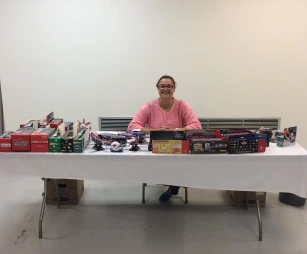
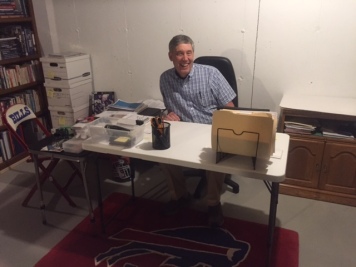
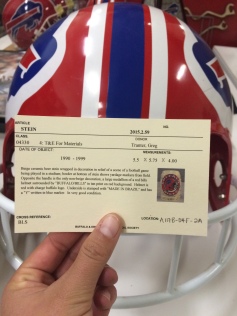 So, what’s happening with it?
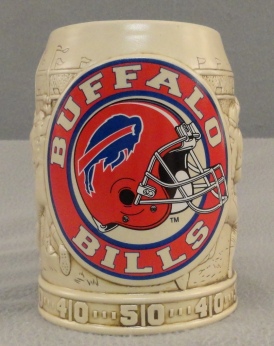 Okay, so there is still a lot of work to be done. Can we still see the Collection even though it isn’t on display?
 I am incredibly fortunate; every vacation we took as a family featured at least one day-trip to a museum or historic site. Though my parent’s ploy to make us learn may have worked too well, my dad almost kicked my sister and I out of the van on a trip home from Cape Cod because we so desperately and relentlessly were asking to visit the Sandwich Glass Museum again. Luckily we stopped for a visit. What sticks with me just as much as the stories and facts that I’ve learned, is the time spent with loved ones. I feel that museums have a dynamic way of opening us up to learning and also to being in the moment and connecting with each other. This is why I love what I do. Providing our guests with the opportunity to engage not only with our objects and exhibits, but with each other.
 sit us! Every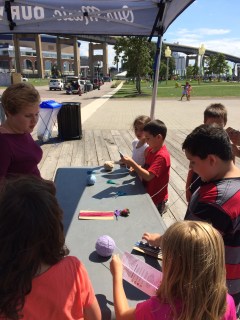
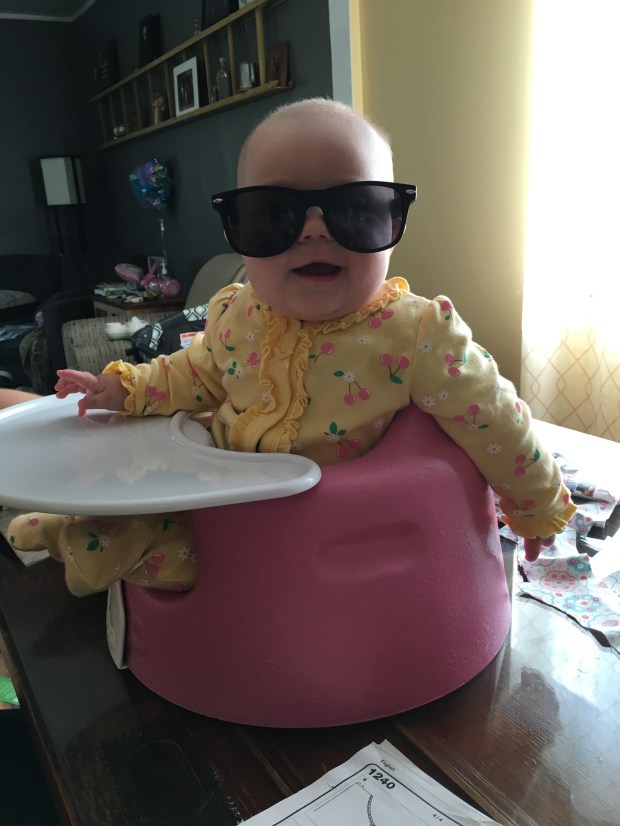
 It is amazing the difference only a year can make. The summer of 2015 was carefree, full of late nights with friends and packed with preparation for all the events held at The Buffalo History Museum. It was one of my favorite summers to date; I tried to soak it all in and garner as many memories as possible.
  I knew – I just knew that no other summer would be the same, you see I was pregnant with my first daughter. Darcy Rose entered the world after a smooth pregnancy in late November of 2015. And I was right, this summer is not the same, she has been life changing – in the best way possible.
 While last summer was fun; having that pregnancy glow, everyone congratulating you, even receiving all that advice, all while working as hard as possible to present The Museum in the best way – this summer is better. I may have been the one pregnant but when Darcy was born she entered more than just her small family of myself and her father, the whole Museum adopted her. She will grow up here at the Museum, at our
  Being a working mom is hard and not only for the mom. Schedules can change suddenly, what worked before may not work now. Through all the trials and tribulations my fellow staff members have been amazing. As a new mother The Buffalo History Museum has come to mean more than a place to enjoy and work. It has become a legacy of fun and education for my friends and family.

 Party on the Portico, guests meet up with friends and enjoy live music, party snacks, cash bar, free 15-minute mini tours of the Museum, and spectacular views of Delaware Park. Always a great time…Come hang on our porch with us!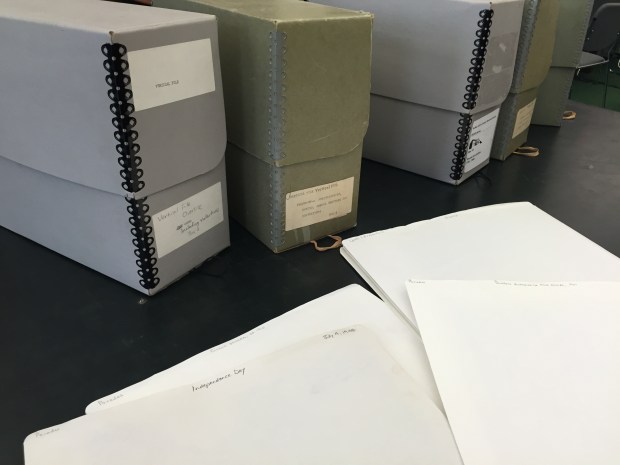





 The Buffalo History Museum Blog