Author: The Buffalo History Museum Blog

Since 1862, The Buffalo History Museum (formerly known as the Buffalo and Erie County Historical Society) has been Western New York’s premier historical organization, serving to collect, research, interpret, and share the Niagara Frontier’s rich history. Its collections include more than 100,000 artifacts, 200,000 photographs, and 20,000 books. The Buffalo History Museum annually presents a wide array of programs, exhibits, tours, outdoor events, and activities for all ages that utilize many of these resources to tell the stories of both ordinary and extraordinary people of Western New York.

Me and Mabel Barnes

– Kindred WNY spirits in history?

Since I began working at The Buffalo History Museum last July, I’ve thought more about personal histories and the artifacts that we leave behind as individuals.

During my first month, Melissa, The Buffalo History Museum Executive Director,  referred to the diary of Mabel Barnes numerous times. Mabel’s diary is one of the museum’s most detailed personal journals in its collection from the  1901 Pan American Exposition. Our conversations about Mabel’s diary and how valuable it is to researchers today – 113 years after the Pan Am – inspired me to dive into my personal journals, which had not been cracked open since 2004.
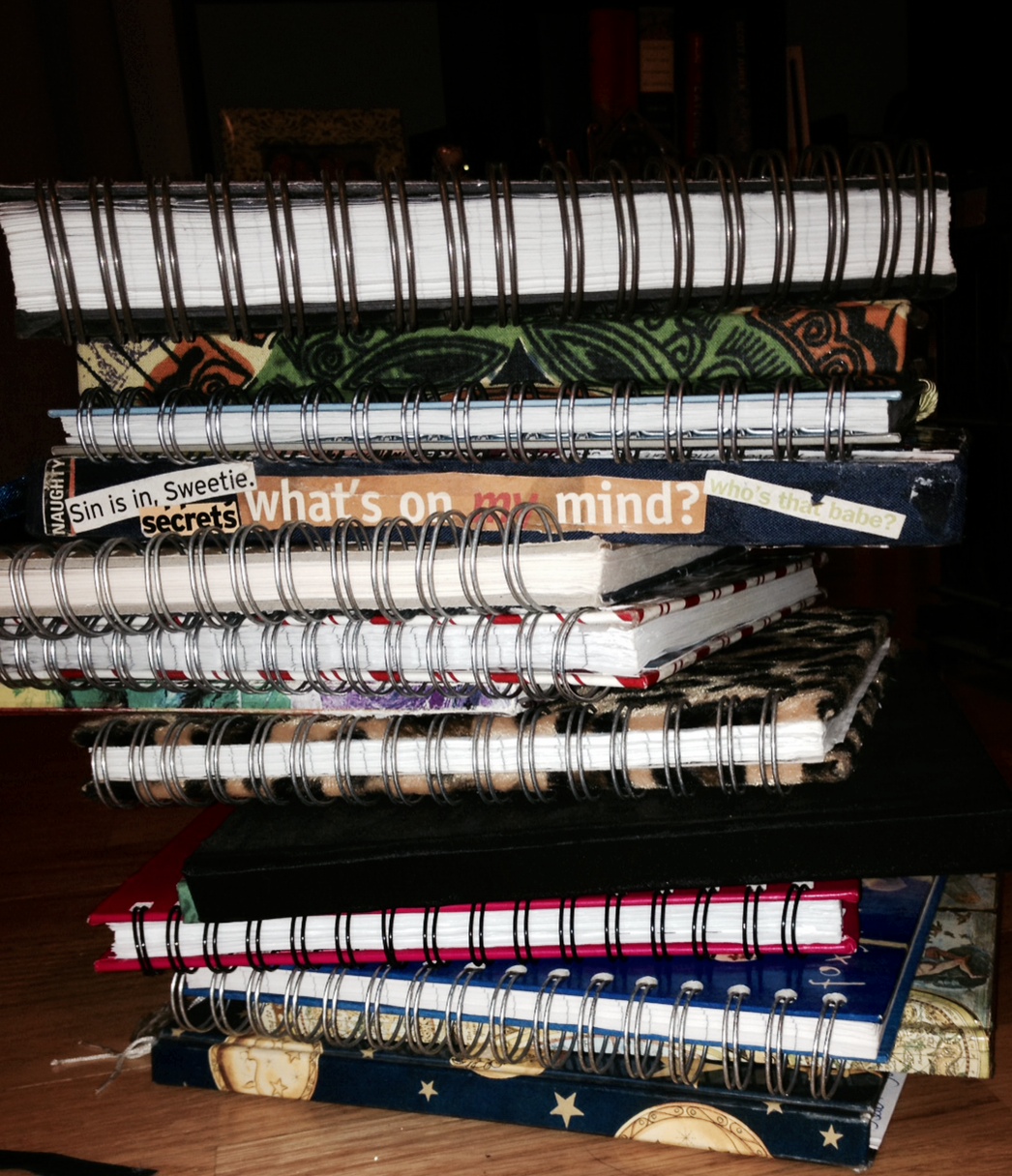
Journals by Kim

Adamant about  journal writing…  

From the ages of 12 – 19, I was adamant about journal writing. I have a stack of bright spiral bound notebooks, covers ranging from leopard fur, polka dots and hot pink, documenting my adolescent years. It’s pretty incredible to look back ten, fifteen years ago and read, in my own handwriting, about what ailed me.

Honestly, I forgot how hard high school was. I forgot how stressed I became over school, sports, a part time job and friends. The excerpt photographed is from May, 2003. As juniors, we had to take five NYS Regents (English, American History, Chemistry, Math B and Foreign Language) exams within the same week. It was grueling. Studying for and passing these exams was all I wrote about for a month.
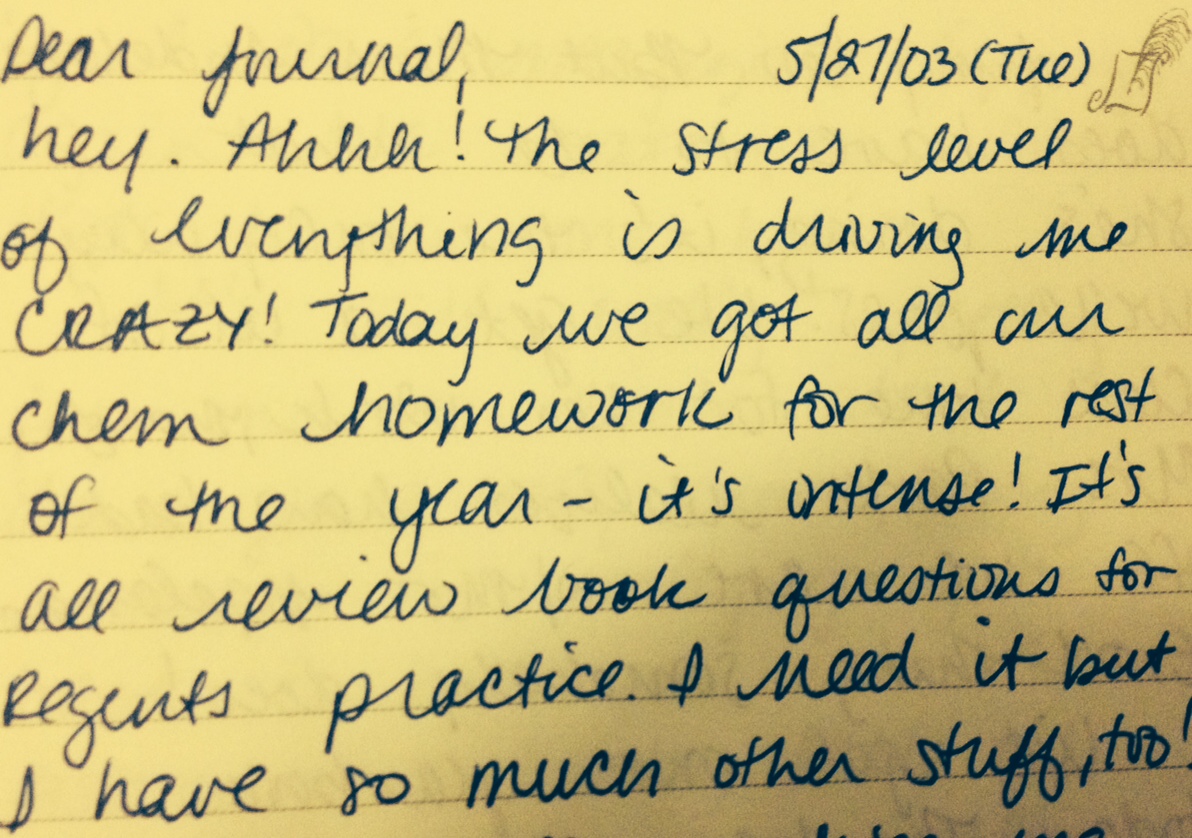
A  page from Kim's diary

An intense page!

There was a break in the study pattern when my best friend and I bought copies of “Harry Potter and the Order of the Phoenix” – we even drove ourselves in Shannon’s clunker and ate at Mighty Taco – at MIDNIGHT! Very cool at 17 years old…

Twenty-five pages of suspense later, I wrote about passing all five Regents exams, though not all with grades mom wanted to plaster on the fridge.

I took a hiatus from journal writing from college through last year. My exposure to personal histories here at the museum has made me more cognizant of my personal legacy. I want my grandchildren to read what I went through – to know that I, too, worried about passing tests, getting my driver’s license, and finding a prom date (not an easy feat at an all girl’s high school). I hope that my future family will be able to relate and find joy from my teenage years.

My New Years’ resolution was to start journaling again this year. Two and a half months in, I’m holding strong.

Kimberly Luangpakdy
Director of Resource Development 

Mabel Barnes page

A page from Mabel Barnes journal.

Mabel Barnes, daughter of Joshua Barnes, a confectioner, was born in 1877 and was part of the Old Central High School graduating class of 1894.  She began her teaching career with the Buffalo Public Schools at School 23 on Delavan Street in November 1895.  She attended the 1901 Pan Am Exhibition 34 times. 

Think Cherry Blossoms!

The Buffalo History Museum in Cherry Blossoms
The Buffalo History Museum and
Cherry Blossoms

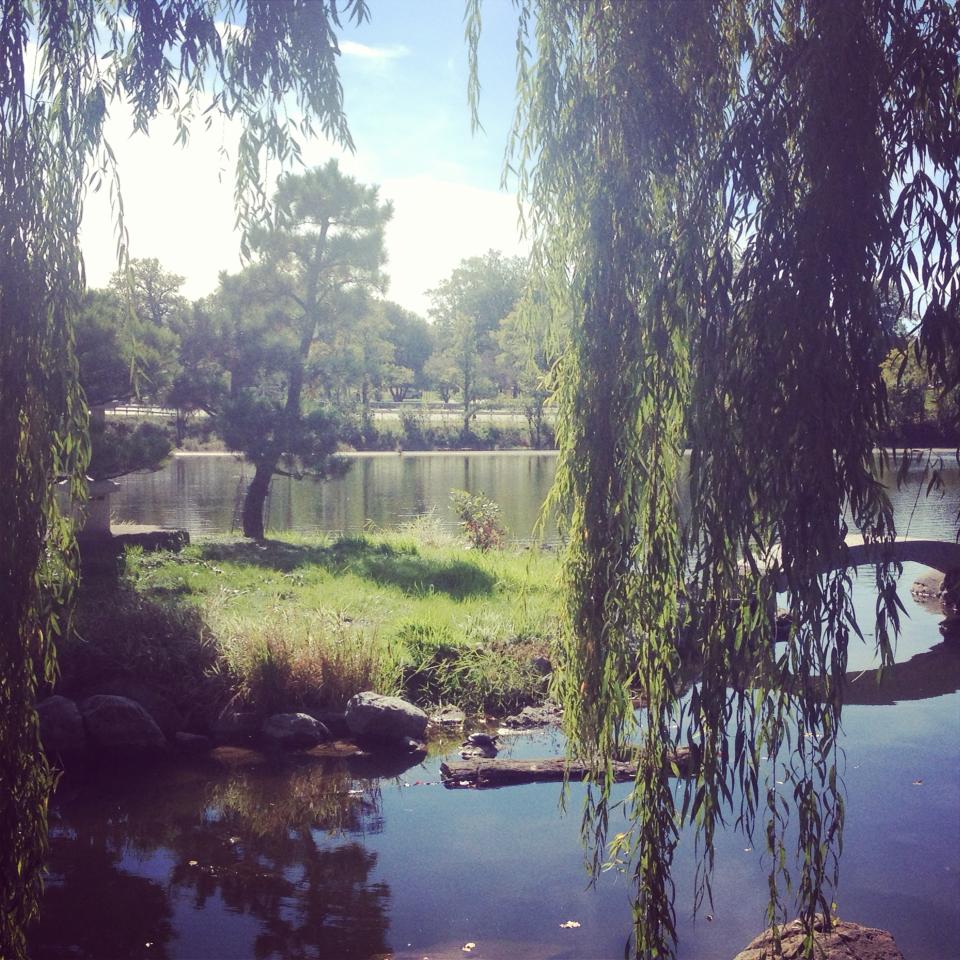
The Japanese Gardens of Buffalo were originally conceived in 1970 with construction being complete in 1972. The purpose was to create a place of beauty and tranquility as well as commemorate the sister city relationship between Buffalo, New York and Kanazawa, Japan. Based on a famous garden in Kanazawa, Japan the Japanese Gardens of Buffalo are located in the Fredrick Law Olmsted Parkway system on the banks of Mirror Lake behind The Buffalo History Museum. The Gardens feature three islands, Japanese garden lanterns, pagodas, and a pathway with rustic stone steps imported from Japan. It is considered a horticultural masterpiece with over one thousand plants, including fifty flowering Cherry Blossom trees and an extensive Hosta collection, donated by the Hosta Society of Western New York. There is also a collection of Japanese Maple and Evergreen trees.

996947_10202355274029119_2036795223_n

The first ever Buffalo Cherry Blossom Festival will be held from April 23 to May 4, 2014 in and around the Japanese Garden in Delaware Park, Buffalo, New York.

The Buffalo History Museum is thrilled to be among the several local cultural organizations that will assist in executing interpretive programming for visitors of all ages and walks of life.

  • An academic lecture and book signing with Dr. Francis Kowsky who will speak about his publication, ” The Best Planned City in the World: Olmsted, Vaux, and the Buffalo Park System. That takes place on Wednesday, April 16, 2014 at 6:30 p.m.
  • A traditional Japanese Tea Ceremony that will take place at The Buffalo History Museum on Wednesday April 23, 2014. Visitors will have the opportunity to observe the ancient Ceremony lead by Atsuko Nishida-Mitchell.
  • On Saturday, April 26 with a lecture and booking signing by Washington D.C. based author Ann McClellan. McClellan will speak about her book, “The Cherry Blossom Festival: Sakura Celebration.” The lecture will discuss the long standing and famous Cherry Blossom Festival of the nation’s capital and draw parallels to Buffalo’s inaugural celebration.
  • Activities will take place in the Japanese Gardens throughout the entire Festival including Japanese kite making, games, dancers, musicians, puppeteers, and dancers.
  • CherryBlossomDay On Sunday, May 4, Cherry Blossom Family Day features artifact scavenger hunts, museum tours, live performers and lots more!

Tara Lyons,
Program Manager

Hockey Memories

Image

One of the many tickets on display from the 1970-75 Sabres seasons.

I was probably 6 or 7 years old when I first started watching hockey. My aunt would come over to babysit my brother and me. We’d make popcorn in the air-popper and plop down on the couch in front of our now prehistoric Zenith television. It wasn’t long before my father took me to my first game. It was against Winnipeg. We sat up in the oranges. I can remember the people in front of me chanting, “Fly Home, Jets!”

Growing up in Kenmore, my friends and I played street hockey until it was too dark to see the bright orange ball. When Sega Genesis came along, NHL ’93 was one of my first games. We played every day after school. (To this day, NHL’14 is the only reason I own a Sony Playstation) I was like a lot of kids, hockey was just always in our lives.

Image

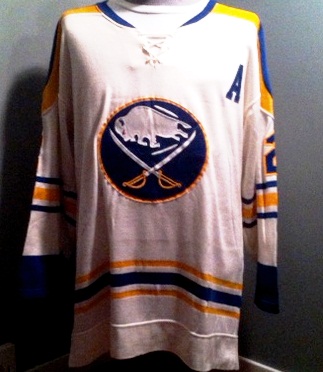
Tim Horton’s last worn home jersey before his tragic accident.

Fast forward 20 years—

I’m on a ladder, installing into a case the last home jersey that Tim Horton wore before his tragic car accident. Sometimes I feel bad that other people can’t have my job.

Since our Buffalo Sabres exhibit opened last Friday, I have met countless people who have come in to relive some of the team’s early days. They share with me their stories. They tell me about how their first game, their favorite moments, and their favorite players. In that moment, you realize that we are all so similar. In that moment you realize that, someday, you might be in their shoes.

We all seek to share stories with one another. What better place than here?

Anthony Greco
Director of  Exhibits & Interpretive Planning

FORGING A CONNECTION: YOUR BUFFALO SABRES 1970-1975 runs through May 25, 2014
at The Buffalo History Museum, located at 1 Museum Court at Elmwood Avenue 

Native American History in the Museum Shop

Native American display 2The shop at The Buffalo History Museum is not simply for souvenirs.  Although we do have plenty of those, we also stock items of local interest that are difficult to find elsewhere.  We carry a wide range of books about local history, many by local authors.  Among our book selection is an excellent collection on Native American history. Thumbing through the pages in this collection reveals a breadth of fascinating knowledge.  Most of us in Western New York have at least a rudimentary knowledge of local Seneca and Haudenosaunee (Iroquois) history.  But, our book collection on this subject dives into deeper levels of understanding on this important local culture.

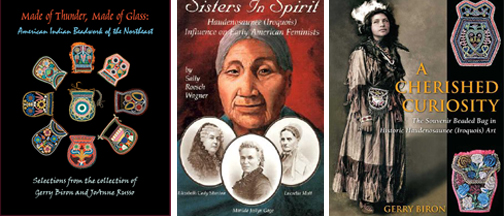
One author who has spent his life digging into buried Iroquois history is Gerry Biron. It is important to note that Biron, like many Native authors today, prefers the term “Haudenosaunee” to refer to the Iroquois people.  Haudenosaunee is the name the Iroquois use to refer to themselves, and more people today are realizing it is respectful to use the Native term rather than one thrust upon them by outsiders.  Just as their name is being revived, Haudenosaunee art is also being given the recognition it deserves. Biron has spent years researching and collecting Native American beadwork made by the Haudenosaunee people from New York to Canada. He explains the historical importance of beadwork to the Native people.  Each design is filled with symbolism and meaning. The beadwork would grace clothing and accessories. Eventually these accessories, especially small ladies’ bags, would be sold as souvenirs at Niagara Falls.

Today many in the art world from collectors to galleries are emphasizing the notion that categories such as “folk art” and indigenous art have long been dismissed as kitsch, or “less than” the fine art standards as defined by Western sensibilities. Biron has made it his mission to redefine our perceptions and elevate Native beadwork to be recognized as art of important significance. His collection of beaded bags and antique photographs of beadwork have been displayed in galleries in the American Northeast. The Buffalo History Museum Shop carries two of his books; A Cherished Curiosity and Made of Thunder, Made of Glass.

Another author who is digging through hidden Native history is Sally Roesch Wagner.  In her book, Sisters in Spirit, Wagner explores how women’s rights advocates were inspired and influenced by Seneca women and cultural traditions.  We know that The Women’s Rights Movement of the mid-19th century was concurrent with the Abolitionist movement. These two groups often worked together, as both recognized that they were two disadvantaged groups in society. These movements were heavily based in Western and Central New York.  In fact, both the Susan B. Anthony House and the Frederick Douglas Resource Center are located in our close neighbor city, Rochester.  The famous Seneca Falls Convention for Women’s Rights was held in Seneca Falls, NY, in 1848. But, many of us don’t realize the ties between women’s rights advocates and the local Native people of Western, NY.

Sally Roesch Wagner says that while Susan B. Anthony is the main person that history often focuses on when discussing the Women’s Rights Movement, she chooses instead to discuss Elizabeth Cady Stanton and Matilda Joslyn Gage; two women with strong views that are controversial even today.  But, what is striking about these women is their efforts to immerse themselves in understanding the culture of their Seneca neighbors. While many people today don’t understand the complex dynamic of the hierarchy of the Iroquois Federation, Wagner explains that Harriet Maxwell Converse, a close friend of Matilda Joslyn Gage, understood it very well. Converse explained that the Iroquois Federation was made up of six distinct nations, and each nation was unique. She says “The Seneca Nation… is as distinct among Indians as France, Germany, and England are distinct among the nations of Europe” (p23). Within each nation are several tribes.  Therefore the Seneca are not a tribe, but the nation that houses many tribes. This distinction is important because referring to the nations as tribes diminishes their status and affects how they are perceived by those responsible for negotiating and honoring treaties.

Because they exposed themselves to Native life and culture, these women’s rights advocates observed a social dynamic completely unlike the Western model. While men and women of the Seneca certainly did have gender roles, their roles did not subjugate women. Since the Seneca traced ancestry through the matrilineal line, women retained custodial rights of children, whereas European American women lost custody of their children in the event of a divorce. Other issues which are uncomfortable to discuss, such as a women’s right over her own body and domestic abuse, are also explored by Wagner. In an age when a woman who fled from an abusive marriage could be forcibly returned to her husband just as runaway slaves were returned to their masters, women’s rights advocates from Upstate New York found inspiration in the rights afforded to their neighboring Seneca women.

NativeAMericanBooksThese books are only a fraction of the Native American selection we stock here in the Museum shop. While these examples highlight largely unknown history, we also carry books that are more general overviews, as well as children’s history books about Native culture, as well as gifts and trinkets such as playing cards, miniature canoes, and other items. These items compliment a visit to the museum to see our wonderful Native American exhibit. So, please plan a day to learn a little about local Seneca culture at the Buffalo History Museum and Shop!

Carolyn Emerick
Museum Shop Employee

Always a bridesmaid…..FINALLY a bride!

Image

In order to start getting ready for our Something Old, Something New event I decided to do some research on wedding traditions and superstitions for some Facebook fodder. There was one superstition that grabbed my attention. Three times a bridesmaid, never a bride, unless you’re a bridesmaid seven times only then will you break the curse and be a bride!

Well, as it turns out I’ve been a bridesmaid seven times! (Soon to be eight, in June) Some girls may find this to be a curse, but I honestly feel so fortunate to have been such a special part of one of the most important days in my closest friends’ lives. Yes, being a bridesmaid is expensive and time consuming – I have the dresses hanging in my closet to prove it! But, alas, I have some great memories for always that has made it all worthwhile.

I guess this “bridesmaid curse” might have some truth to it since I will finally be a bride this September and all of my matron friends will be standing by my side with a new dress to hang in their closet.

Since I can’t invite all who read this blog to my wedding, the next best invitation I can extend is to join us at The Buffalo History Museum’s second annual Something Old, Something New event that will take place March 2 at 3 p.m. There will be a pop-up bridal exhibit, bridesmaid dresses on display, an auction, food, drinks and more!    Check out the details on our website buffalohistory.org

Jennifer
Marketing Associate/Graphic Designer

Greetings!

Today Jen and I dialed up our go-to-guy-for-all-things-museum-cool, Brian McAlonie, at Thinking Outside the Square

Brian running a workshop under the portico.

Brian running a workshop under the portico.

We wanted to pick his brain about our new blog, cuz if ever there was a great go-to place for expert feedback, it’s at TOTS.

jenworking2

Jen working hard on our quarterly newsletter.

The good news: Brian likes The Buffalo History Museum’s Blog! 

Jen LaBella, TBHM Marketing Associate and Graphic Artist, deserves big kudos for setting it up. Yours truly souped up the “Latest News” page on our website by linking the blog button. BlogButton

We are now ready to share to the universe and we’re psyched about our new (to us) frontier!  We hope the content ahead serves an audience with extra special museum and history news: from the ordinary to the extraordinary, we’re here to share.   

Cmc and Walt

Walt & me on the portico.

Just in, as I was writing this:  Walt Mayer, Director of Museum Collections, called to tell me about a great idea for sharing Victorian love sentiments from the collection every Friday in February to celebrate Valentine’s Day!  You’ll be able to find that on our Facebook page so check back in to see some historic images of romance.

 Gotta run, lots to do… 

 – Connie Caldwell, Director of Communications & Community Engagement

Making an Impact: The Buffalo History Museum Library

Lib 2

Cynthia Van Ness, MLS
Director of Library & Archives

If you’ve taken up genealogy, you know the impact of finally finding a picture of your great-grandfather’s tavern. Or seeing a picture of the long-demolished corner deli where you bought Atomic Fireballs as a kid.

And then there’s the impact when a new fact upends your understanding of what happened back when. Gospel truth does get demoted to urban legend, but first it puts up a fight. One of the just-will-not-die Buffalo urban legends is that in 1901, every house in Buffalo was supposedly photographed for the Pan-American Exposition and we have the pictures. If only it was true!

We do have an estimated 12,000 house pictures dating mostly from 1870-1970, but there was no campaign to photograph the entire city for the Pan-Am. We don’t have pictures of everyone’s house, then or now. There are another estimated 12,000 pictures of schools, factories, churches, hotels, office buildings, grain elevators, and so on. Our pictures are not online, so an in-person visit is needed to see them.

This extensive collection of architectural imagery has another kind of impact: economic.

How so?

Maybe you’ve noticed that Buffalo’s often deteriorated buildings are getting restored, repurposed, and re-occupied at an unprecedented rate. The Lafayette Hotel renovation was just the most celebrated of a long and growing list of rehabs. In Buffalo, existing buildings are attracting more private construction dollars than new-builds. This resurgence has a lot to do with the National Register and New York State’s preservation tax credit program.

In most Buffalo neighborhoods, getting listed on the National Register opens up tax credits for the restoration of old buildings, both residential and commercial. Property owners typically depend on professional architectural historians to write National Register nominations. In turn, professional architectural historians depend on the Library’s collection for historical evidence, visual and otherwise, to make the case for National Register eligibility. We have the region’s largest collection of period photographs, atlases, and architectural drawings.

Investment = jobs, and not just for architectural historians. Bringing back old buildings means hiring architects, engineers, roofers, plumbers, plasterers, electricians, painters, carpenters, decorators, and more. Preservation is good for Buffalo’s economy because when you renovate an existing building, you typically spend about 60% of your budget on labor, which is usually supplied by local talent.  In turn, those paychecks are spent mostly in the local economy on rent, groceries, etc. The remaining 40% goes to materials, which are usually manufactured elsewhere. For a new build, that ratio is reversed. Forty percent of your budget goes to labor and 60% leaves the local economy to buy materials made elsewhere.

We like to think that in our own indirect way, the Library is helping in the revitalization of Buffalo, one building at a time.

To learn more about New York State’s preservation tax credit program, go to: nysparks.com/shpo/tax-credit-programs/
To learn more about the National Register, go to: http://www.nps.gov/nr/faq.htm
To learn more about the economic impact of historic preservation, go to: http://www.achp.gov/economic-general.html

Pan-Am Exposition Map – Then and Now

panammap

Some Pan-Am Planning Fun Facts

  • Eight million Americans celebrated the dawn of a new century by visiting the Pan- American Exposition in 1901
  • The Pan-American Exposition opened its doors on May 1, 1901. Turn-of-the-century Buffalo was prosperous and growing. The exposition’s energy, dazzling presentation, brashness, patriotism, refinement, and hucksterism all captured the spirit of the city.
  • After a series of controversies and delays, the Pan-Am’s Board of Directors selected the
    Rumsey Farm as the site for the exposition. The farm lay between Elmwood and
    Delaware Avenues north of the city’s developed area.
  • During the summer and fall of 1899, hundreds of men working with horse-drawn grading and earth-moving equipment attacked the 350-acre site. Planners laid out a design centered around an inverted “T” to lead visitors toward the Electric Tower, promoted as the height of human achievement.
  • Less than a year later, the site swarmed with the activity of thousands of workers and craftsmen racing to erect the exposition’s 90 major buildings and make them weather- tight before the onset of winter. As the buildings climbed skywards, other groups of workers excavated canals, laid out roads, erected fountains, and installed thousands of trees and shrubs.
  • Buffalo was a growing industrial city with a large immigrant population of Poles, Germans, Italians, recent arrivals from other European countries, and a small community of African Americans. Pan-Am contractors had no trouble hiring large gangs of laborers, carpenters, plasterers, and other skilled craftsmen. In just over 18 months, these workers transformed open farm fields into the “Rainbow City,” an enormous and visually stunning fantasy world.

Stay updated with The Buffalo History Museum blog for more trivia and behind the scenes fun with museum staff!

← Back

Thank you for your response. ✨

15 Artifacts from 15 Decades

1860s: One of our earliest donations, the Ararat Stone ca. 1825, was donated in 1866 by Lewis F. Allen.

1870s: One of our library’s most frequently referenced artifacts is the Hopkins Atlas of 1872. While we have many maps and other atlases, it is the first to illustrate footprints of every building in Buffalo and list the property owner’s name.

1880s: Buffalo’s Julius E. Francis was a true Abraham Lincoln worshiper. He amassed a sizable collection of Lincoln and Civil War artifacts. In the 1880s, Francis first installed his collection at the Young Men’s Association Building.

1890s: In 1898, we acquired the Red Jacket Medal from Minnie Van Renssealer for $100.

1900s: District Attorney Penney turned over the Czolgosz relics to the Society in 1902.

1910s: 2 brass tablets, one in memory of Millard Fillmore and one in memory of Grover Cleveland, were unveiled at the museum to celebrate our 50th anniversary in 1912.

1920s: The Apostolic clock was donated in 1923 by creator Mr. Myles Hughes.

1930s: In 1937, George W. Benson officially donated his extensive glass and ceramics collections, including examples of valuable 19th and early 20th century pieces.

1940s: In 1948, we purchased the Trial of Red Jacket after being on loan to the museum since 1904.

The Centaur statue in front of the museum was donated in 1953.

The Centaur statue in front of the museum was donated in 1953.

1950s: During the 1950s, the Collections Department began using the compound numbering system to accession artifacts. This system is the most prevalent in museums throughout the country and is still in use today.

1960s: In 1965, we re-inventoried and cataloged a donation from former First Lady and Buffalo native Francis Folsom. Dating from her school days, the interesting array of material includes student notebooks, compositions, and tests.

1970s: In the 1970s, we obtained a grant to photograph all of the artifacts in its collections; The Wettlaufer Glass Collection  was aquired in 1972.

1980s: Julia Boyer Reinstein donated her impressive collection of over 80 historic quilts and coverlets.

1990s: In 1999, William G. Gisel Sr. donated a collection of artifacts from Bell Aerospace, including a Bell Agena model no. 8096 rocket engine.

2000s: Philanthropist Charles Rand Penney lived the life of a consummate collector, meticulously assembling more than 100,000 objects. Upon his death, we acquired his Larkin Company collection. Comprised of nearly 700 artifacts, his collection of Larkin premiums particularly filled a gap in our collection.